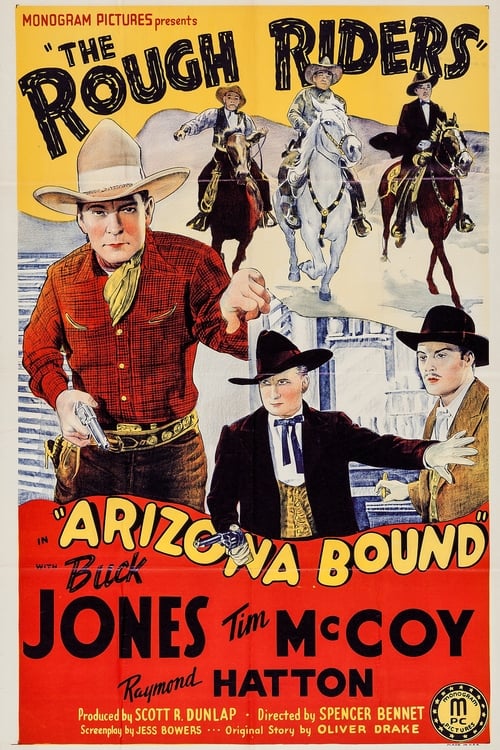
Arizona Bound
1941
No user ratings available yet
Representation score: 1.1 out of 10

Representation Score
Minimal
1938
PassedDirector
John English
Runtime
53 minutes
Average Rating
No ratings yetNew Showbiz Analysis
Call The Mesquiteers serves as a quintessential 1930s B-Western, prioritizing genre stability over social exploration. The film relies on established clichés, such as clear hero-villain distinctions and the reinforcement of traditional masculinity, to drive its action-oriented plot. The production adheres to the strict socio-cultural constraints of the era, offering a standardized depiction of the American frontier. The narrative architecture focuses on preserving social order and traditional authority rather than introducing perspectives that reflect multiple aspects of identity or challenging existing hierarchies.
Category Breakdown
The film does not include any depictions of LGBTQ+ identities or queer subtext. It operates within a framework that assumes everyone is straight and cisgender.
Male characters play a central role in driving the story, while female characters are mostly peripheral and passive, supporting the main male-driven arc.
The casting is predominantly white, reflecting the all-white ensemble typical of 1938 Westerns. The story centers on a localized, Anglo-centric frontier experience.
The film upholds traditional Western values and moral clarity. It emphasizes the importance of traditional authority and the restoration of order through frontier justice.
There is no representation of visible or invisible disabilities. Characters are shown through the lens of standard physical capability required for action.
Present on Screen
Limited or Absent
Official Synopsis
The Three Mesquiteers are forced to track down a train robbery ring after some of the gang hijack their truck for a getaway and the police conclude they are part of the gang, an identification which is just fine with the gang's nameless chief.
1941
1935
1944
1940

1942
1939
1934
1938
No reviews yet. Be the first to share your thoughts on this movie!
Use the rating form above to leave a star rating and optional review.