
My Paper Dolls
2023
No user ratings available yet
Representation score: 4.1 out of 10
Representation Score
Fair
2012
Director
Niccolò Castelli
Average Rating
No ratings yetNew Showbiz Analysis
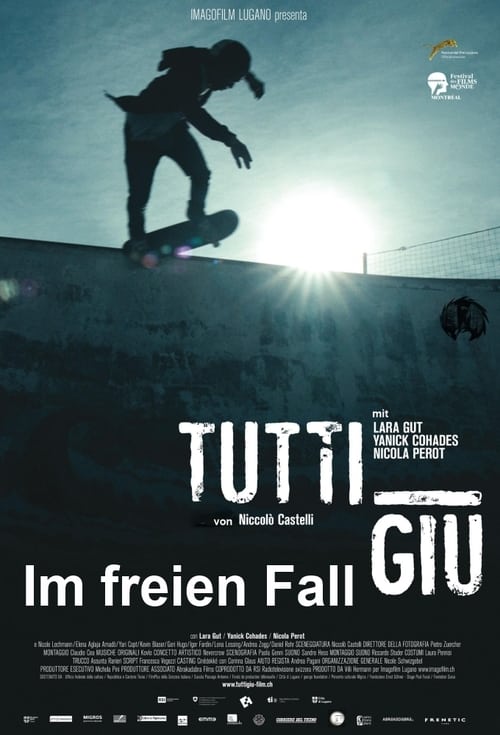
Tutti giù is a character-driven drama that prioritizes the psychological turbulence of adolescence over explicit identity politics. The film uses a tripartite structure to explore the internal shifts of three teenagers as they navigate the transition to adulthood. It deconstructs the coming-of-age cliché by focusing on instability and individualistic discovery rather than social integration or familial duty. However, the film lacks explicit representation of LGBTQ+ identities or racial diversity, functioning more as a nuanced study of the self rather than a vehicle for systemic critique or demographic representation.
Category Breakdown
The film delves into the emotional lives of its main characters but does not explicitly center on LGBTQ+ identities or non-traditional romantic relationships.
The film features a balanced mix of genders, with two male and one female protagonist. Chiara is shown taking control through her involvement in skiing, but the story focuses more on the overall instability of adolescence rather than challenging gender hierarchies.
The story revolves around universal themes of adolescence set in a modern context. There is no indication of a predominantly non-white cast or specific racial conflicts.
The film emphasizes personal identity and subcultures such as graffiti and extreme sports, rather than traditional religious or cultural institutions. It challenges typical childhood narratives by highlighting instability and the transition to adulthood.
There is no information available regarding the portrayal of characters with physical, sensory, or neurodivergent conditions in this work.
Present on Screen
Limited or Absent
Official Synopsis
Jullo, Edo, and Chiara: three teenagers among thousands. Three teenagers who live for sport. Jullo is his skateboard, Chiara conquers the world on skis, Edo is a graffiti artist. One day, Jullo, Chiara, and Edo suddenly discover their own lives, each in their own way. Fears, dreams, surprises, loneliness, insecurity, expectations, instability, imbalance. Then a moment, a second, a click. A click that leads them to rediscover themselves, that leads them into adulthood, or that relentlessly sweeps them away.
2023
2017
2020
2008
2019
2018
2016
1997
No reviews yet. Be the first to share your thoughts on this movie!
Use the rating form above to leave a star rating and optional review.