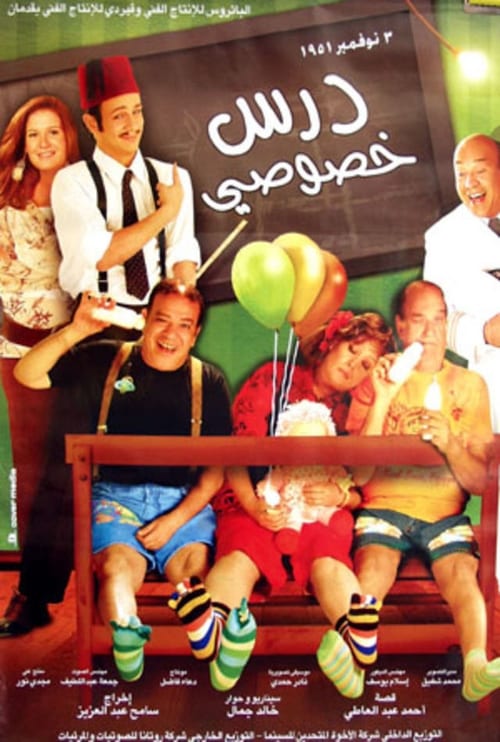
Private Lesson
2005
No user ratings available yet
Representation score: 5.2 out of 10

Representation Score
Fair
2014
Director
Ahmed El Gendy
Runtime
105 minutes
Average Rating
No ratings yetNew Showbiz Analysis
World War III offers a moderate level of representation by positioning itself within an Egyptian cultural context. By using a local setting and a non-Western framework, the film avoids the dominance of Anglo-centric narratives. However, the film remains limited by a male-centric focus. The primary plot revolves around a male protagonist and his social activities, leaving little room for diverse gendered ability to act or queer visibility. While the fantasy premise involving historical statues suggests a unique cultural perspective, the lack of character arcs that reflect multiple aspects of identity prevents a higher diversity score.
Category Breakdown
The film does not include any explicit references to LGBTQ+ characters or critiques of the assumption that everyone is straight or cisgender. It focuses on Khamis and the supernatural events in the museum without addressing queer identities.
The story centers around a male protagonist and his male friends. Female characters do not play a significant role, and there is no subversion of traditional masculine archetypes.
As an Egyptian production, the film operates within a non-Western cultural framework. This naturally disrupts Anglo-centric storytelling, although specific details about the ethnic makeup of the cast are not provided.
The film sets its fantasy elements within a local, non-Western context. This departure from Western-centric morality allows for a potential deconstruction of historical permanence through its museum setting.
There is no information about characters with physical, sensory, or neurodivergent disabilities. Therefore, no assessment can be made regarding their representation or the avoidance of stereotypes.
Present on Screen
Limited or Absent
Official Synopsis
Khamis is a terrible football player, while playing football with his friends he shoots the ball away and broke an abandoned museum's window. After entering the museum he finds that statues become alive at 17:00.
2005
2009

2012
2015
2011

2024
1963
1955
No reviews yet. Be the first to share your thoughts on this movie!
Use the rating form above to leave a star rating and optional review.