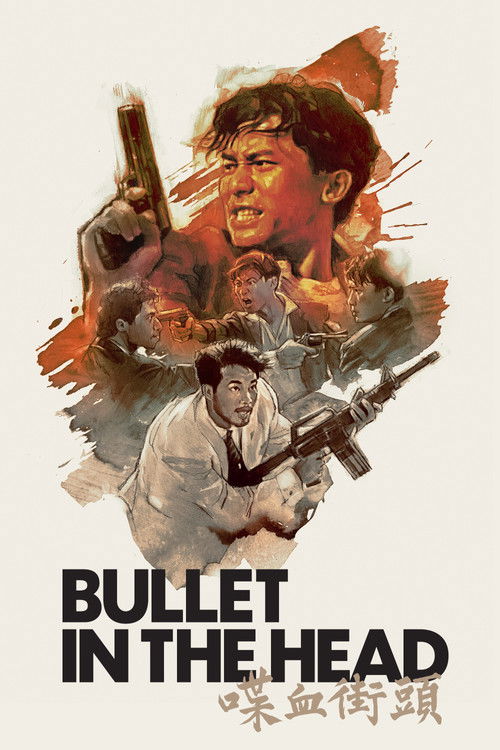
Bullet in the Head
1990
No user ratings available yet
Representation score: 2.6 out of 10
Representation Score
Limited
1989
Not RatedDirector
Tsui Hark
Runtime
118 minutes
Average Rating
No ratings yetNew Showbiz Analysis
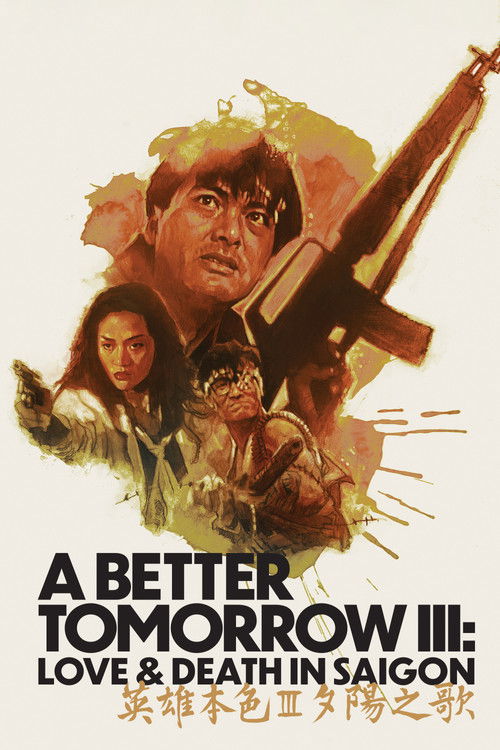
Tsui Hark’s film succeeds by using a post-colonial lens to explore the chaos of a collapsing South Vietnamese regime. By centering the narrative on displacement and regional identity, it offers a more nuanced perspective than typical Western war cinema. The film's strength lies in its sophisticated approach to moral ambiguity. Instead of relying on traditional heroism, it presents a world where survivalist ethics emerge from geopolitical upheaval and the breakdown of authority. However, the film remains limited by its lack of LGBTQ+ representation and a heavy reliance on male-driven action. While the female lead possesses ability to act, the core combat elements are centered on male protagonists.
Category Breakdown
The film does not include any LGBTQ+ characters or explore non-straight relationships. The story focuses on survival and romantic relationships in a war setting.
Maggie Cheung plays a central role, contributing significantly to the story. However, the narrative is mainly driven by male-led combat and martial arts.
Set during the Fall of Saigon, the film explores Southeast Asian identity through a post-colonial lens. It avoids a Western-centric view by focusing on regional displacement.
The film critiques institutional stability by presenting a survivalist ethos in place of traditional morality. It depicts a landscape of socioeconomic collapse and systemic political failure.
There are no significant depictions of visible or invisible disabilities within the main storyline.
Present on Screen
Limited or Absent
Official Synopsis
Before the events of A Better Tomorrow (1986), Mark 'Gor' Lee heads to Saigon during the Vietnam War to bring home his uncle and cousin, but his task becomes complicated when a well-known criminal tries to help him.
1990
2000
1982

1990
1994
2002
1984
1989
No reviews yet. Be the first to share your thoughts on this movie!
Use the rating form above to leave a star rating and optional review.