
Another One for the Million
1964
No user ratings available yet
Representation score: 0.6 out of 10
Representation Score
Limited
1965
Director
Giannis Dalianidis, Andreas Andreadakis
Runtime
82 minutes
Average Rating
No ratings yetNew Showbiz Analysis
The film is a product of the Golden Age of Greek Cinema, prioritizing popular comedy over modern multi-layered advocacy. While it maintains a traditional demographic profile, it offers a subtle critique of how institutions use political labels to suppress individual morality. Its strength lies in its narrative skepticism toward systemic integrity. However, the lack of diversity in race, orientation, and gender roles keeps the overall impact limited to a specific cultural era.
Category Breakdown
The film does not include any LGBTQ+ characters or narratives. It follows a conventional social structure typical of 1960s Mediterranean cinema.
Lia plays a significant role in driving the embezzlement subplot and deciding the film's resolution. However, the central conflict remains anchored in male authority and traditional hierarchies.
The cast and setting appear homogeneous, reflecting the specific cultural context of 1965 Greece. There is no indication of racial blending within the narrative.
The story critiques institutional corruption by showing how systemic power protects itself. It uses political labels like 'communist' to sideline those who uphold ethical codes.
There are no visible or invisible disabilities portrayed in the film. No information is available to assess this category.
Present on Screen
Limited or Absent
Official Synopsis
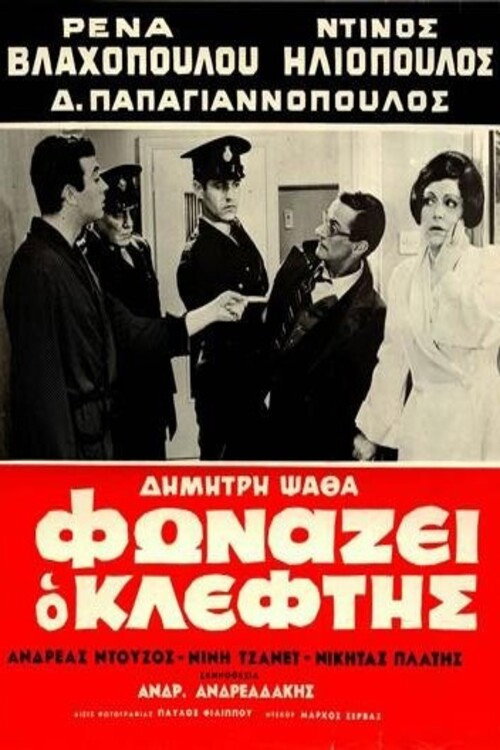
An extremelly honest man, Timoleon Lambrou (Dinos Iliopoulos), who has lost his job many times due to his honesty finds a wallet full of cash and a letter from the USA that belongs to a military General who is the president o a large public organisation and decides to return it. The General's wife though, Lia (Rena Vlahopoulou), covers for her brother (Andreas Douzos) who has embezzled from her husband's organisation and the letter proves the lies and embezzlements. Finally, Lia gets hold of the letter despite the honest man's objections but the General, decides to hire him due to his honesty. There, he discovers the embezzlements and when he tells everything to the General, his wife and her brother try to prove that he is crazy, a crook, a communist and anti-systemic, things that usually make the General furious. The honest man is imprisoned but in the end Lia decides to come forth with the truth.
1964

1964
1961

1966
1985
1963
1962

1984
No reviews yet. Be the first to share your thoughts on this movie!
Use the rating form above to leave a star rating and optional review.