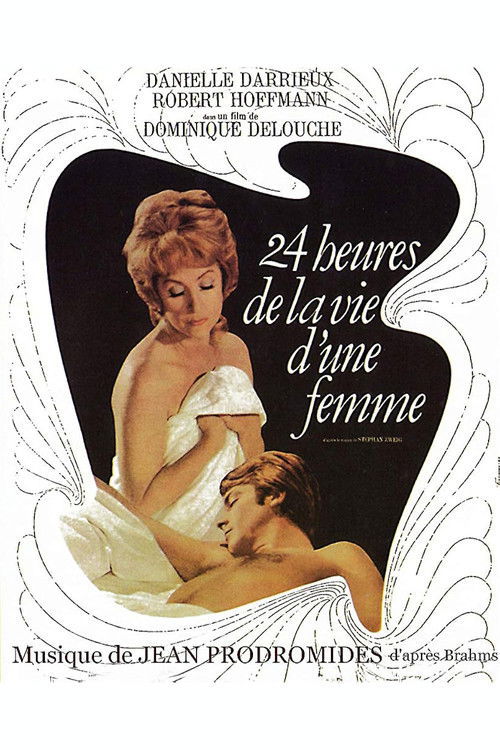
24 Hours in a Woman's Life
1968
No user ratings available yet
Representation score: 4.8 out of 10

Representation Score
Fair
2002
Director
Laurent Bouhnik
Runtime
107 minutes
Average Rating
No ratings yetNew Showbiz Analysis
Laurent Bouhnik’s drama excels as a character-driven exploration that prioritizes individual subjective experiences over traditional social hierarchies. By intertwining three distinct timelines, the film delves into how personal passion can be a transformative force across generations. The narrative’s strength lies in its focus on women's ability to drive the story and a diverse European social fabric. It moves beyond a homogeneous perspective to highlight the intense, often transient, emotional lives of its characters. However, the film remains largely within traditional romantic frameworks, lacking explicit representation of LGBTQ+ identities or radical identity politics.
Category Breakdown
The film focuses on traditional romantic relationships without explicitly addressing LGBTQ+ identities or non-assuming gender matches what was assigned at birth narratives.
The narrative highlights the emotional impact of women through passionate and driven female protagonists. It centers their experiences and elevates their roles in the story.
Characters from different ethnic backgrounds, such as an Italian instructor and a Polish gambler, enrich the story with a diverse European perspective.
The film emphasizes personal freedom and individual experiences rather than strict religious or cultural traditions. It focuses on transient connections and personal growth over traditional family structures.
There is no evident portrayal of physical or neurodivergent disabilities in the narrative.
Present on Screen
Limited or Absent
Official Synopsis
Set in 1913, 1936 and 2001. When he returns to the casino and seaside resort of his early teens, Louis, a 78 year old man encounters Olivia, a 19 year old young woman madly in love with a violent cad. Louis tells the story of his own mother having a passionate, driven fling with his Italian tennis instructor in 1936, and of Marie Collins Brown, the slightly older widowed woman who helped him through his confusion and pain by recounting the story of her passionate 24 hour fling with a hopeless young Polish gambler in 1913.
1968

1950
2012
1971
2020

2007
2011
1996
No reviews yet. Be the first to share your thoughts on this movie!
Use the rating form above to leave a star rating and optional review.