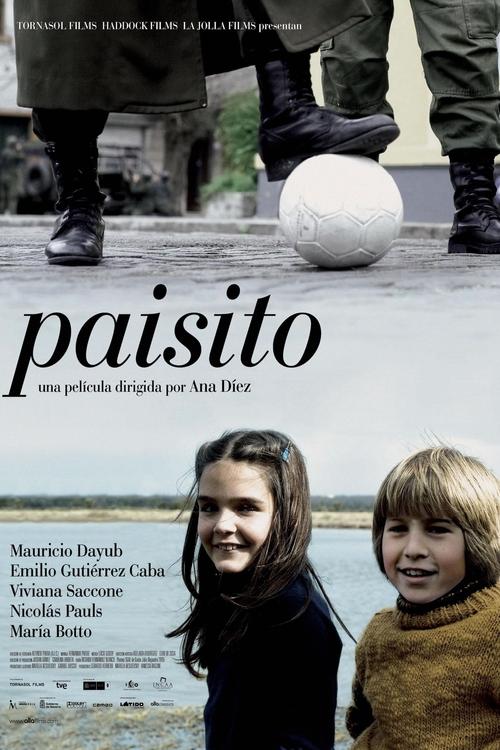
Small Country
2008
No user ratings available yet
Representation score: 5.7 out of 10

Representation Score
Fair
2004
Director
Sebastián Araya
Runtime
85 minutes
Average Rating
No ratings yetNew Showbiz Analysis
Azul y Blanco uses a classic star-crossed lovers cliché to explore tribalism in sports and urban social divisions. By focusing on a romance that requires breaking social loyalties, the film examines the tension between personal ability to act and group identity. While the film offers a critique of social conformity, it lacks depth in representing diverse identities. The narrative highlights the disruption of social boundaries without delving into specific identity politics or demographic complexities. Ultimately, the film provides an intimate look at how personal connections can challenge the rigidity of a social environment.
Category Breakdown
The film focuses on a heterosexual relationship between members of opposing soccer teams. There are no clear examples of LGBTQ+ narratives or non-straight identities.
The main characters seem to have equal roles as they navigate their journey through Santiago. However, the film does not provide much detail about challenging traditional gender power dynamics.
Set in Santiago, the film includes a cast that represents Chilean national identity. It does not show a strong effort towards diverse casting or race-bending.
The story criticizes rigid tribalism and groupthink by presenting love as an act of defiance. It emphasizes individual emotional truth over established social institutions.
There is no information about the inclusion or portrayal of characters with visible or invisible disabilities.
Present on Screen
Limited or Absent
Official Synopsis
When enemy members of the two main Chilean soccer teams, Azul and Paloma meet in a fight after a soccer game they fall in love at first sight. They run away through the night in the streets of Santiago, while two groups search for them, when they meet, happens the inevitable.
2008

2013

2006

2018

2017
2016
2010

2022
No reviews yet. Be the first to share your thoughts on this movie!
Use the rating form above to leave a star rating and optional review.