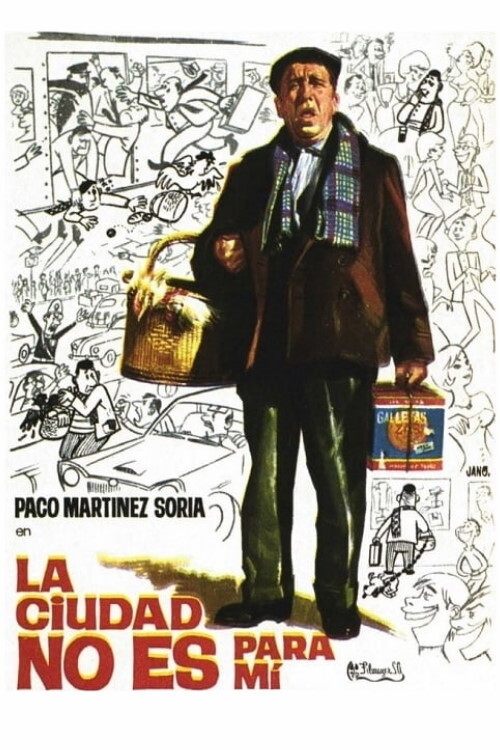
La ciudad no es para mí
1966
No user ratings available yet
Representation score: 0.9 out of 10
Representation Score
Minimal
1969
Director
Pedro Lazaga Sabater
Runtime
90 minutes
Average Rating
No ratings yetNew Showbiz Analysis
The film operates as a traditional period comedy that prioritizes established social hierarchies. It uses the friction between rural life and urban Madrid to highlight the importance of conventional family structures. While the daughters' unhappiness hints at the weight of domestic labor, the story ultimately seeks stability through patriarchal figures. The narrative lacks depth in reflecting multiple aspects of identity, focusing instead on a homogeneous Spanish identity. Overall, the work reinforces the social norms of its era rather than challenging them, centering on traditional roles and the preservation of the family unit.
Category Breakdown
The film focuses on traditional marriage and biological lineage. It reinforces the assumption that everyone is straight or cisgender without depicting non-assuming gender matches what was assigned at birth identities.
The plot centers on the domestic burdens faced by women and the patriarchal role of the father. While daughters face urban struggles, the narrative relies on a male figure to restore order.
The setting and cast reflect the demographic homogeneity of 1960s Spain. The story is centered on a white, Spanish ethnic identity with no racial blending.
The film explores the tension between rural tradition and urban modernity. It emphasizes the importance of the family unit and the patriarch over social deconstruction.
There is no mention of characters with visible or invisible disabilities in the narrative.
Present on Screen
Limited or Absent
Official Synopsis
A widow shepherd who lives at the Aragonese Pyrenees sees how his three young daughters, Cándida, Visi, and Nieves, go to Madrid to find a better life and leave him alone. There they all get married, have sons and forget their father. One day, Marcelino receives a letter from Cándida, who wants him to stay with her family for some time. What she really wants is some help from her father, as she's not able to take care of her ten daughters and her upcoming child. Marcelino goes to Madrid, but, once there, he only finds an unknown, frantic and hostile world, and also three unhappy daughters...
1966
1985
1967

1984
1977
1973
1977
1976
No reviews yet. Be the first to share your thoughts on this movie!
Use the rating form above to leave a star rating and optional review.