
Intrigue
1988
No user ratings available yet
Representation score: 3.2 out of 10
Representation Score
Minimal
1992
NRDirector
Colin Bucksey
Runtime
95 minutes
Average Rating
No ratings yetNew Showbiz Analysis
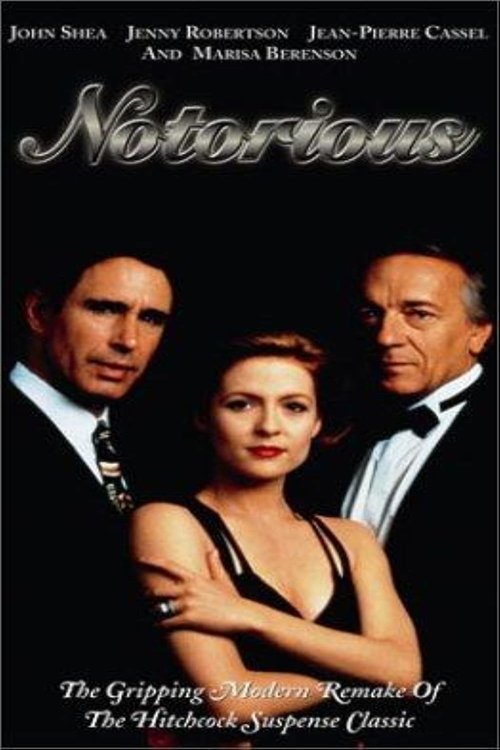
Notorious is a traditional Cold War espionage thriller that emphasizes genre clichés over social commentary. The plot revolves around political suspicion and the personal costs of intelligence work, aligning with the geopolitical frameworks of the early 1990s. The film relies on conventional romantic and state-driven narratives. While it features a strong female lead, the power dynamics remain centered on institutional hierarchies rather than challenging them. Overall, the film operates as a typical genre piece that upholds the social and political norms of its time without offering diverse or progressive perspectives.
Category Breakdown
The film focuses on a heterosexual relationship between Alicia Velorus and Devlin. There are no characters with non-conforming gender identities or LGBTQ+ representation.
Alicia Velorus is a strong female protagonist who drives the plot forward. However, her actions are largely influenced by male-dominated institutions such as the CIA.
The film does not provide specific information about the racial makeup of the cast. It follows typical casting practices for 1990s espionage thrillers.
The story emphasizes Western institutions, particularly the CIA, as the main arbiters of justice. It does not offer any critique of these geopolitical structures.
There are no characters with visible or invisible disabilities mentioned in the film.
Present on Screen
Limited or Absent
Official Synopsis
After Alicia Velorus' father is convicted as a communist spy, CIA asks her to prove her loyalty by getting close to her father's friend, who's a suspected arms dealer. In the meantime she and her CIA contact Devlin fall in love.
1988

1946

1989

1969

1979
1985
1990

2009
No reviews yet. Be the first to share your thoughts on this movie!
Use the rating form above to leave a star rating and optional review.