
Mr. Bean's Holiday
2007
No user ratings available yet
Representation score: 2.6 out of 10
Representation Score
Limited
1997
PGDirector
John Pasquin
Runtime
105 minutes
Average Rating
No ratings yetNew Showbiz Analysis
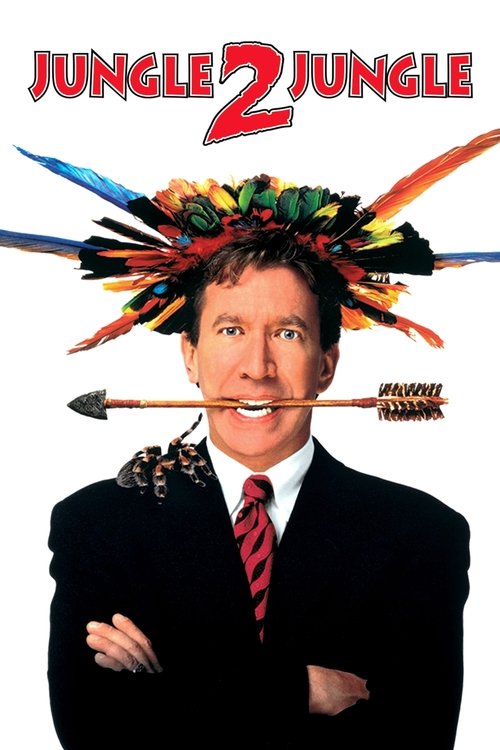
Jungle 2 Jungle succeeds in providing a unique perspective by centering an indigenous protagonist. Mimi-Siku’s journey from a Brazilian tribal village to a corporate New York environment offers a fresh look at metropolitan social norms. However, the film leans on traditional 1990s comedy clichés. It relies on patriarchal structures and uses cultural displacement primarily as a comedic device rather than a tool for deeper critique. Overall, while the film incorporates diverse cultural elements, it does not actively dismantle established gender or social hierarchies, focusing instead on personal reconciliation within the current system.
Category Breakdown
The film doesn't include any LGBTQ+ characters or explore non-straight identities. The story revolves around traditional family ties and a former spouse.
The story emphasizes the relationship between father and son. Female characters mainly act as catalysts for the plot rather than driving the main storyline.
Mimi-Siku brings a non-Western perspective as he explores New York City. His indigenous Brazilian background helps him critique Western social norms using his own cultural tools.
The story uses the contrast between indigenous communal values and Western capitalism for humor. However, it doesn’t deeply critique these opposing structures.
The film does not prominently feature any characters with visible or invisible disabilities.
Present on Screen
Limited or Absent
Official Synopsis
Uptight New York City executive, Michael Cromwell, pursues his soon-to-be ex-wife to South America and returns home with the son he never knew he had—a boy raised in a tribal village in Brazil. Armed with only his blowgun, the 13-year-old Mimi-Siku discovers that the world outside his jungle home is indeed a strange place.
2007
1968

2003
1990
1997

2001
1994
1991
No reviews yet. Be the first to share your thoughts on this movie!
Use the rating form above to leave a star rating and optional review.