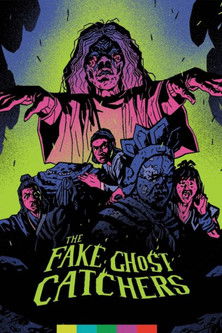
The Fake Ghost Catchers
1982
No user ratings available yet
Representation score: 3.1 out of 10

Representation Score
Fair
1982
Director
Wu Ma
Runtime
99 minutes
Average Rating
No ratings yetNew Showbiz Analysis
The Dead and the Deadly is a culturally specific work that draws its strength from its regional identity. By combining horror with comedy, it challenges standard genre clichés through the use of local folklore and supernatural elements. While the film excels in ethnic authenticity and cultural autonomy, it remains rooted in traditional social structures. character's ability to drive the story is primarily centered within a male ensemble, which limits gender diversity. Ultimately, the film stands as a significant example of 1980s Hong Kong genre-bending, prioritizing a unique cultural worldview over Western cinematic norms.
Category Breakdown
The film does not explicitly depict LGBTQ+ identities or relationships outside of traditional ones. Instead, it focuses on conventional family dynamics typical of the time period.
The story revolves around a male-dominated group of friends and an uncle. However, a female character plays a crucial role in sparking the main conflict of the plot.
Set in Hong Kong, the film showcases a non-Western cast and setting. It maintains cultural authenticity through its specific cultural and linguistic context.
The film incorporates local folklore and spiritual traditions, such as funeral services, using a comedic approach. It emphasizes community-based social structures rather than Westernized models.
There is no depiction of physical or neurodivergent disabilities within the narrative.
Present on Screen
Limited or Absent
Official Synopsis
Wah Li, known as Fat Boy to his friends, lives with his great-uncle the priest (Uncle). Together with his oddball friends Lai Li and Momo, Wah Li helps Uncle to run the local funeral services. When the body Ma Lun Chio is brought back to the village by a new wife and her "brother", Wai Li is suspicious. He sets out to find out how his friend died, but things are not what they seem.
1982

1980
2014
1985
1992
1991
1980
1987
No reviews yet. Be the first to share your thoughts on this movie!
Use the rating form above to leave a star rating and optional review.