Little Berlin
2020
No user ratings available yet
Representation score: 3.1 out of 10
Representation Score
Limited
2009
Not RatedDirector
Bartosz Konopka
Runtime
39 minutes
Average Rating
No ratings yetNew Showbiz Analysis
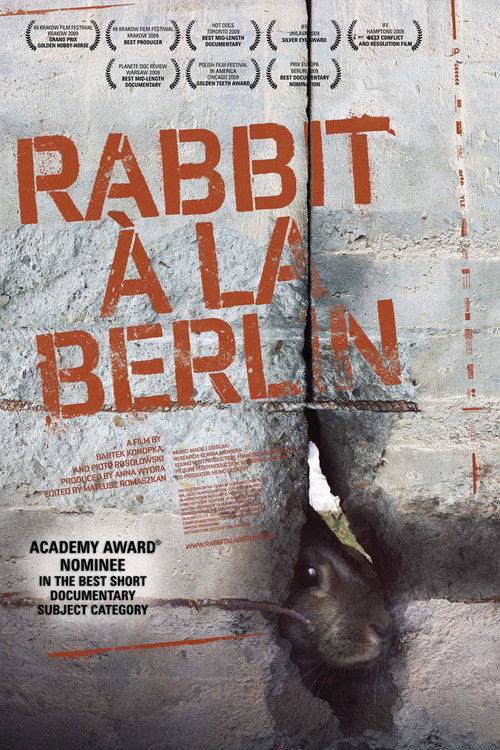
Rabbit à la Berlin uses a non-human lens to provide a metaphorical commentary on geopolitical shifts. By centering on the biological inhabitants of the Berlin 'Death Zone,' the film replaces traditional political discourse with an ecological perspective. Instead of celebrating the collapse of the Berlin Wall as an unmitigated good, it explores the systemic displacement and loss of a stable ecosystem. While the lack of human characters who reflect more than one aspect of diversity limits technical scores, the film offers a sophisticated engagement with power dynamics. It views guards and walls as systemic forces that inadvertently created a sanctuary.
Category Breakdown
Since the documentary focuses on animal populations, there are no depictions of human sexual orientation or gender identity.
The story remains gender-neutral by focusing on a collective biological group. While it avoids traditional hierarchies, it lacks individual character arcs that could drive gendered representation.
Rabbits serve as a metaphor for human migration and the integration struggles of Eastern Europeans. This non-human lens explores the experiences of being 'othered' during systemic transitions.
The film critiques geopolitical structures by framing the Berlin 'Death Zone' as a paradoxical sanctuary. It portrays the transition to the free world as a disruptive and uncertain process.
Because the film centers on nature and animal life, it does not address physical disabilities or neurodivergence within a human social context.
Present on Screen
Limited or Absent
Official Synopsis
The untold story about wild rabbits which lived between the Berlin Walls. For 28 years Death Zone was their safest home. Full of grass, no predators, guards protecting them from human disturbance. They were closed but happy. When their population grew up to thousands, guards started to remove them. But rabbits survived and stayed there. Unfortunately one day the wall fell down. Rabbits had to abandon comfortable system. They moved to West Berlin and have been living there in a few colonies since then. They are still learning how to live in the free world, same as we - the citizens of Eastern Europe.
2020

1999

2019

2004
2016

2017
2011
2018
No reviews yet. Be the first to share your thoughts on this movie!
Use the rating form above to leave a star rating and optional review.