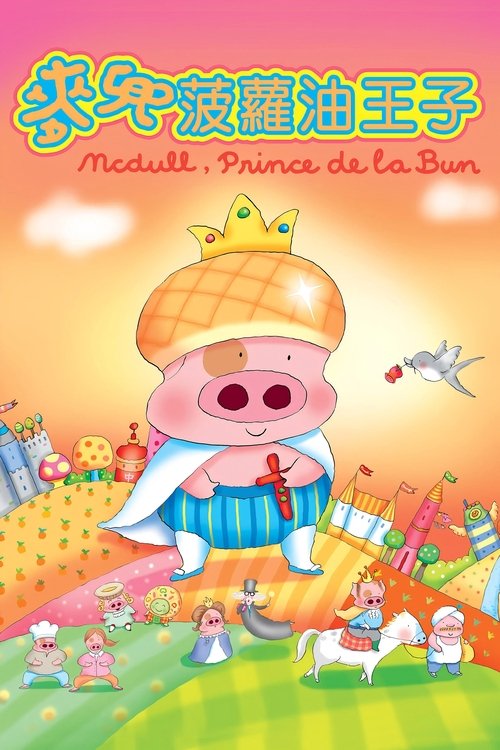
McDull, Prince de la Bun
2004
No user ratings available yet
Representation score: 5.5 out of 10
Representation Score
Good
2014
Director
Brian Tse
Runtime
81 minutes
Average Rating
No ratings yetNew Showbiz Analysis
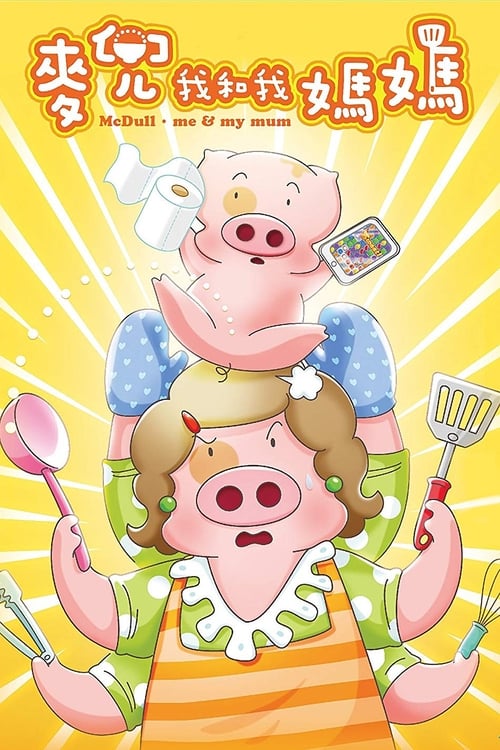
McDull: Me & My Mum succeeds as a localized character study that prioritizes authentic Hong Kong identity over globalized animation clichés. Its greatest strength lies in its refusal to rely on Western-centric narrative structures, offering a grounded look at working-class life and Cantonese culture. However, the film's narrow thematic scope limits its broader social impact. It does not engage with LGBTQ+ identities or explicitly address disability-centric themes. Ultimately, the film presents a nuanced portrait of maternal ability to act and socioeconomic struggle, providing a meaningful, culturally specific experience despite its limited multi-layered breadth.
Category Breakdown
The film does not include any LGBTQ+ characters or explore non-straight relationships. The story focuses solely on the relationship between a mother and her son.
The mother is a strong, independent businesswoman who runs several small businesses. She avoids the stereotype of a submissive housewife by showing significant economic influence and intelligence.
The film stands out by focusing on a Cantonese-speaking, working-class family in Hong Kong. This approach breaks away from Western-centric animation clichés through deep cultural specificity.
The story emphasizes the resilience needed to navigate urban capitalism and high-density living. It uses local Cantonese culture to resist the pressures of globalization.
McDull is shown as less intellectually sharp, possibly indicating a neurodivergent condition. However, this is presented as a gentle character trait rather than a central plot device.
Present on Screen
Limited or Absent
Official Synopsis
As a child, Bobby Mak was known as Mcdull. Although Mcdull wasn‘t the sharpest tool in the shed, his mother was a different story. Her astounding intelligence and resourcefulness enabled her to, for example, simultaneously run more than six businesses from a space of less than 100 square feet. Mcdull and his mother lived together happily during Mcdull‘s childhood, but things began to change as Mcdull got older. A distance that never existed before began to grow between him and his mother…
2004
2011

2001
2012
2009
2020
No reviews yet. Be the first to share your thoughts on this movie!
Use the rating form above to leave a star rating and optional review.