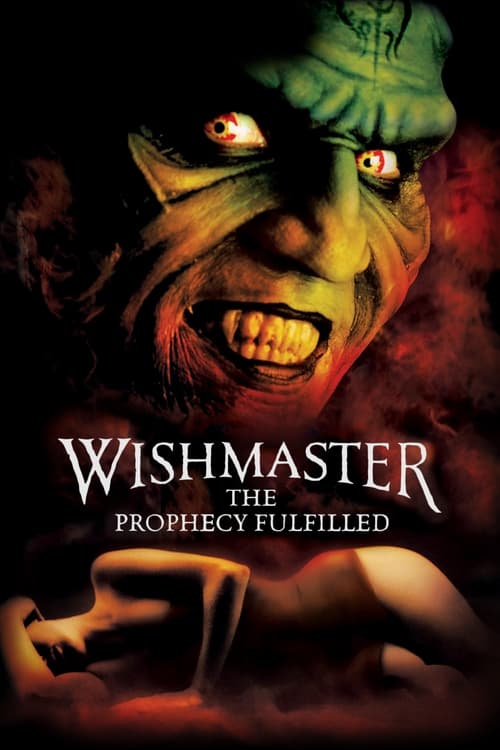
Wishmaster: The Prophecy Fulfilled
2002
No user ratings available yet
Representation score: 3.0 out of 10

Representation Score
Limited
2001
RDirector
Chris Angel
Runtime
89 minutes
Average Rating
No ratings yetNew Showbiz Analysis
Wishmaster 3: Beyond the Gates of Hell operates as a standard genre piece that prioritizes established horror clichés over progressive storytelling. The narrative relies on traditional archetypes rather than attempting to disrupt social hierarchies or provide nuanced representation of underrepresented identities. The film’s framework is largely homogeneous, reflecting the direct-to-video horror traditions of the early 2000s. While it provides a female lead, the characterization remains tethered to conventional cinematic descriptors that do not actively deconstruct gender dynamics. Ultimately, the film lacks multi-layered depth. It functions as a supernatural slasher driven by individual ability to act and cosmic horror, offering little in the way of socio-political or cultural deconstruction.
Category Breakdown
The film follows traditional straight-centered structures typical of early-2000s supernatural horror. There is no representation of non-straight relationships or challenges to the assumption that everyone is straight or cisgender.
Diana Collins serves as the main female character through the 'final girl' archetype. However, she is described using traditional feminine traits like 'beautiful' and 'innocent,' which reinforce conventional ideas of femininity.
The setting suggests a reliance on homogeneous casting common in low-budget horror of this era. There is no evidence of significant non-white majority casts or diverse ethnic representation.
The story focuses on individual greed and the fulfillment of wishes within a standard moralistic framework. It avoids engaging in critiques of Western institutions or organized religion.
There is no discernible evidence regarding the inclusion or portrayal of characters with physical or neurodivergent disabilities.
Present on Screen
Limited or Absent
Official Synopsis
The evil Djinn is back at it again, this time wreaking havoc on the students of Illinois' Baxter University. His victim is a beautiful, innocent and studious teenage girl named Diana Collins who accidentally opened up the Djinn's tomb and released him.
2002

1997
1995
1988
1999
2017
2010

2006
No reviews yet. Be the first to share your thoughts on this movie!
Use the rating form above to leave a star rating and optional review.