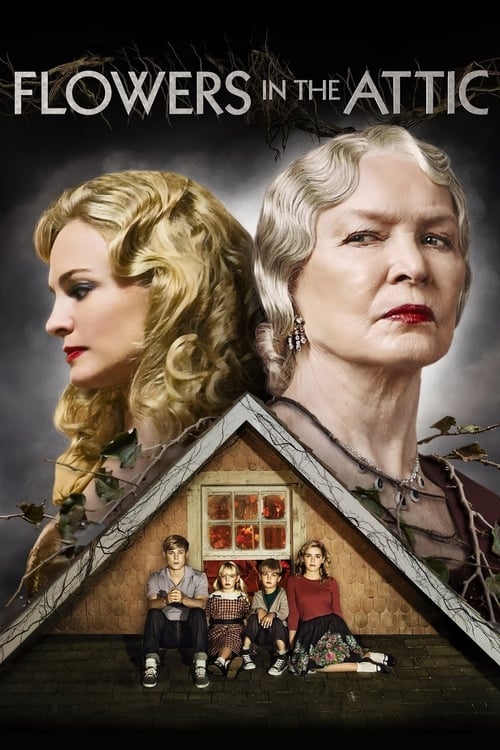
Flowers in the Attic
2014
No user ratings available yet
Representation score: 2.3 out of 10

Representation Score
Fair
1987
RDirector
Jeffrey Bloom
Runtime
93 minutes
Average Rating
No ratings yetNew Showbiz Analysis
Flowers in the Attic is a narrow, claustrophobic study of a wealthy, white family. It lacks any meaningful LGBTQ+ or racial diversity, adhering to the demographic norms of its era through a homogeneous cast. However, the film finds strength in its subversion of social structures. It dismantles the idea of the family as a safe haven, instead presenting domestic hierarchies as predatory and driven by capitalist greed. While it offers a profound critique of Western inheritance and maternal archetypes, the lack of diverse identities and the use of physical decline as a mere plot device keep the overall score low.
Category Breakdown
The film does not include any LGBTQ+ characters or non-cisgender identities. The main conflict revolves around incestuous relationships between siblings, rather than queer identities.
The story centers on the emotional journey of the female protagonist, Cathy. It challenges the nurturing mother stereotype by showing a matriarch motivated by greed.
The casting is very uniform, focusing on a wealthy, white, upper-class family. The setting is portrayed through an exclusively Anglo-Saxon lens without any racial diversity.
The narrative critiques Western institutions by depicting the nuclear family as an engine of corruption. It deconstructs the sanctity of the family unit through a lens of greed.
The film uses physical and psychological deterioration primarily as plot devices, rather than exploring issues related to disability or neurodivergence.
Present on Screen
Limited or Absent
Official Synopsis
After the death of her husband, a mother takes her kids off to live with their grandparents in a huge, decrepit old mansion. However, the kids are kept hidden in a room just below the attic, visited only by their mother who becomes less and less concerned about them and their failing health, and more concerned about herself and the inheritence she plans to win back from her dying father.
2014
1956
1996

1964
2020

1976
1962
1993
No reviews yet. Be the first to share your thoughts on this movie!
Use the rating form above to leave a star rating and optional review.