
Out of My Mind
2024
No user ratings available yet
Representation score: 8.4 out of 10
Representation Score
Good
2014
Director
Ivan I. Tverdovsky
Runtime
98 minutes
Average Rating
No ratings yetNew Showbiz Analysis
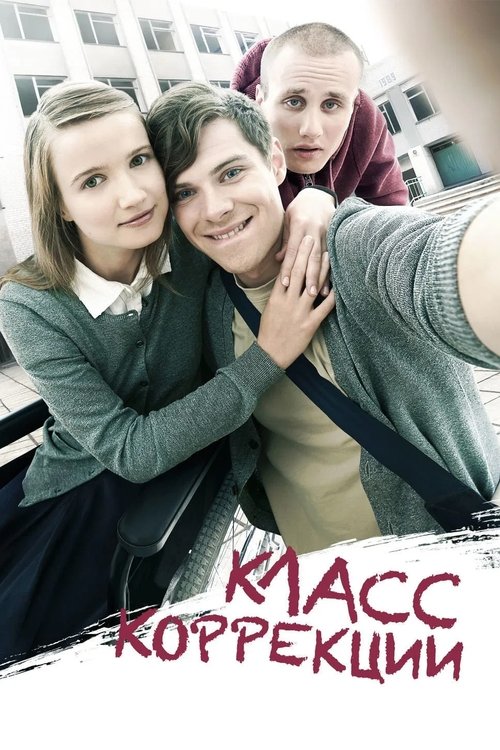
Corrections Class is a biting social realist drama that centers on the tension between individual ability to act and institutional rigidity. By focusing on Lena, a bright disabled girl, the film avoids the pitfalls of 'inspirational stories' and instead highlights how educational systems actively resist neurodivergent integration. The film's strength lies in its sophisticated critique of 'normalcy.' It portrays the school system not as a nurturing environment, but as a site of enforced conformity where teachers work to suppress student interest. While the film excels in disability representation and institutional critique, it lacks breadth in other areas. The narrative remains largely homogeneous and traditional, offering little engagement with queer perspectives or multicultural diversity.
Category Breakdown
The film does not explicitly include LGBTQ+ identities or non-cisgender gender expressions. The story stays focused on a traditional, straight-centered social setting.
Lena offers a nuanced counterpoint to traditional female roles through her intellectual drive and resilience. However, the secondary social dynamics remain largely conventional.
The demographic is relatively uniform, reflecting its specific geographic context. The story emphasizes class and ability rather than ethnic or racial diversity.
The film criticizes institutionalism by depicting the state apparatus as an oppressive force. It challenges the sanctity of authority through unmotivated, obstructive figures.
Disability is central to the film, giving the protagonist significant control over the plot. It frames the struggle through systemic exclusion rather than personal deficit or inspirational stories.
Present on Screen
Limited or Absent
Official Synopsis
Lena is a bright, disabled girl who, after years spent studying at home, is keen to get back to school. She is assigned to a special class for disabled pupils who have to present themselves before a school commission at the end of the year in order to prove that they merit being moved back into a "normal" class. Her enervated teachers, however, show absolutely no desire to motivate the students and help them improve; on the contrary, they try to quash right from the start any interest Lena shows in more complex study material. Nevertheless, Lena soon involves herself in the school routine and gets together with classmate Anton. Yet their transparent happiness is not to everyone's liking and repercussions soon follow.
2024

2013

1995

2019
2017

2008

2013

2014
No reviews yet. Be the first to share your thoughts on this movie!
Use the rating form above to leave a star rating and optional review.