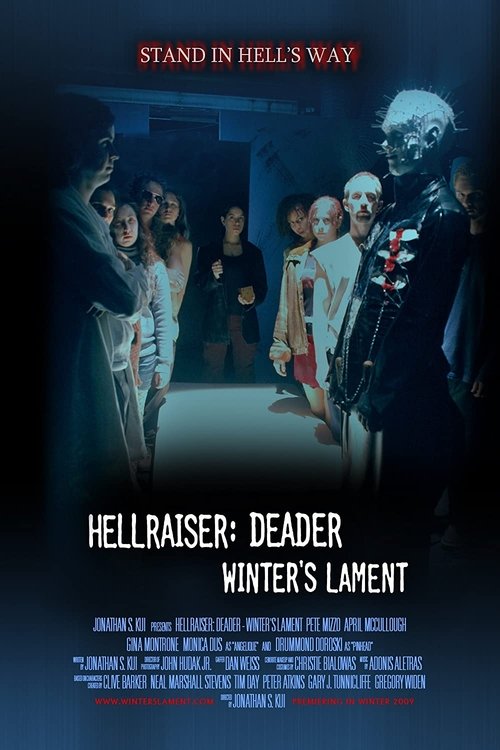
Hellraiser: Deader – Winter's Lament
2009
No user ratings available yet
Representation score: 3.3 out of 10

Representation Score
Fair
2001
Director
Takao Ogasawara
Runtime
24 minutes
Average Rating
No ratings yetNew Showbiz Analysis
Wesker's Report offers a unique, antagonistic perspective on the Resident Evil saga, shifting away from traditional ensemble heroism. It functions as a character study of an anti-establishment figure who views social collapse as evolution. While the film lacks significant characters who reflect more than one aspect of diversity or diverse casting, it possesses thematic complexity. It succeeds in deconstructing established authority and exploring the corruption of major institutions. Ultimately, the work is a narrow, character-driven experience. It prioritizes the machinations of a single male figure over demographic breadth or inclusive representation.
Category Breakdown
The film does not include explicit LGBTQ+ characters or relationships that challenge the assumption that everyone is straight or cisgender. The narrative focuses almost entirely on systemic collapse and biological horror elements.
The story centers on the male perspective of Albert Wesker, emphasizing masculine archetypes of power. While the broader franchise features strong women, this specific retelling prioritizes men's control over the story.
The film lacks evidence of intentional multi-layered casting or racial blending. While the wider series features a global cast, this report focuses on a singular character's viewpoint.
The work offers a critique of Western institutional stability and corporate corruption. It challenges traditional capitalist structures by portraying the Umbrella Corporation as an oppressive entity.
Biological mutations and bodily transformations serve as horror plot devices rather than meaningful representations of disability. There is no evidence of characters with neurodivergent identities or ability to act.
Present on Screen
Limited or Absent
Official Synopsis
A cutscene film narrated by and told from Albert Wesker's point-of-view that retells the events of Resident Evil, Resident Evil 2, and Resident Evil 3: Nemesis.
2009

2000

2000
2008

2006

2020

2013

2007
No reviews yet. Be the first to share your thoughts on this movie!
Use the rating form above to leave a star rating and optional review.