
I Am a Woman Now
2011
No user ratings available yet
Representation score: 6.9 out of 10
Representation Score
Good
1977
XDirector
Doris Wishman
Runtime
78 minutes
Average Rating
No ratings yetNew Showbiz Analysis
Doris Wishman’s documentary serves as a transgressive artifact that centers underrepresented identities. By documenting the work of a sex-change specialist and featuring actual surgical footage, the film provides a level of visibility for trans-identities that was uncommon in 1977. The film's strength lies in its rejection of standard moralistic frameworks and its focus on non-normative gender experiences. It moves away from submissive feminine archetypes to explore more complex, albeit fragmented, psychological realities. However, the film is limited by a lack of multi-layered breadth. The focus remains almost exclusively on a white, Anglo-Saxon demographic, leaving racial and ethnic diversity largely unaddressed.
Category Breakdown
The film offers a rare, early look at gender transition and trans-identity through clinical lectures and footage of reassignment procedures. It acknowledges non-cisgender identities, providing visibility for these communities.
The narrative challenges traditional gender roles by focusing on psychological complexity and social non-conformity. However, the characters' ability to act is often linked to themes of psychological fragmentation.
The film lacks significant racial diversity. The cast and settings reflect a predominantly white, Anglo-Saxon demographic typical of urban exploitation cinema from this era.
The work avoids traditional moral dichotomies, emphasizing the protagonist's subjective identity over religious or social norms. It deconstructs conventional authority and social cohesion.
Mental health and neurodivergence are explored through the protagonist's psychological breakdown. While providing some ability to act, the film risks using the 'instability' cliché as a plot device.
Present on Screen
Limited or Absent
Official Synopsis
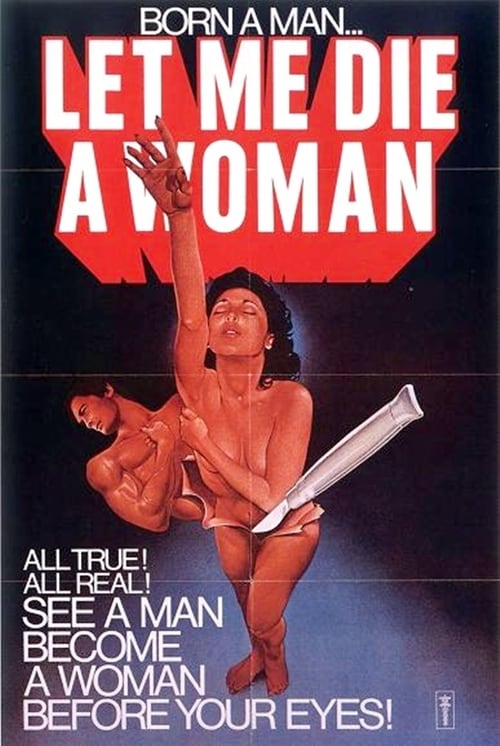
A documentary on the work of sex-change specialist Leo Wollman, including interviews with Wollman and a few of his patients, with an illustrated lecture on the various aspects of trans-identity plus actual footage of a gender reassignment operation.
2011

2019
1990
2021
1992
2011

1986
2010
No reviews yet. Be the first to share your thoughts on this movie!
Use the rating form above to leave a star rating and optional review.