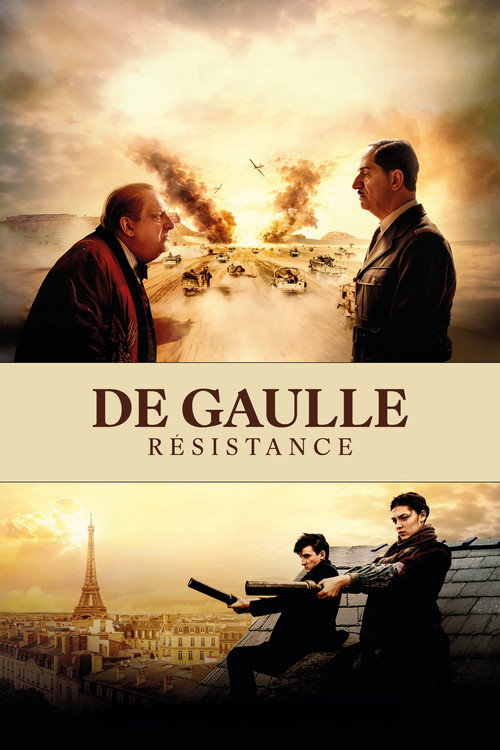
De Gaulle: Résistance
2026
No user ratings available yet
Representation score: 0.2 out of 10

Representation Score
Limited
2026
Director
László Nemes
Runtime
130 minutes
Average Rating
No ratings yetNew Showbiz Analysis
The film opens on the stark, desaturated face of Jean Moulin, a visual choice that immediately frames the narrative as a study in moral endurance rather than political strategy. Nemes sells a legend: the Resistance as a pure, intellectual force against the mechanical brutality of the Gestapo. The camera lingers on Lellouche’s aristocratic features, treating him as a saintly figure whose internal calculation is the true battlefield, while Klaus Barbie is reduced to a cold, efficient instrument of state violence. This binary—clean French intellect versus dirty German efficiency—drives the film’s argument that spiritual integrity is the only victory available to the occupied. The contradiction lies in the film’s reliance on a homogeneous, white, male hierarchy to deliver its universalist message. The Resistance is depicted as a unified front, yet the camera privileges the intellectual elite over the working-class fighters, and the female characters remain static symbols of the “old France” being defended. The ending, likely a solitary shot of Moulin’s unbroken spirit, rewards the audience with a moral verdict that ignores the complex, often messy realities of wartime collaboration and class division. It is a polished, serious biopic that prints the legend of the hero, but in doing so, it flattens the historical landscape into a simple hymn of national virtue, leaving the deeper questions of who exactly was saved, and at what cost, unanswered.
Category Breakdown
No queer characters or same-sex intimacy appear. The 1943 war setting restricts identity to a heterosexual, national binary, leaving no narrative space for gender non-conformity.
Jean Moulin is the sole competent leader and moral center. Women like Comtesse De Forez serve as elegant, supportive foils, reinforcing domestic stability rather than acting as active agents.
The cast is entirely white European, reflecting the 1943 French context. Klaus Barbie embodies the German occupier as a monolithic villain, with no exploration of colonial or non-European perspectives.
The film treats the French Resistance as a moral crusade, positioning patriotism as the highest virtue. Traditional institutions are portrayed as stable ground against occupation, with no critique of Western hierarchies.
No characters with disabilities or chronic illnesses are featured. Physical suffering is tied to the war’s brutality, not to identity or ongoing lived experience, leaving the category unaddressed.
Present on Screen
Limited or Absent
Official Synopsis
In June 1943, Jean Moulin, leader of the French Resistance, is arrested while attempting to reunite the forces of the "Armée Secrète." Interrogated by Klaus Barbie, the head of the Gestapo in Lyon, Moulin is drawn into a relentless confrontation.
2026
2009

2023
2024
2024
2020
2022
2017
No reviews yet. Be the first to share your thoughts on this movie!
Use the rating form above to leave a star rating and optional review.