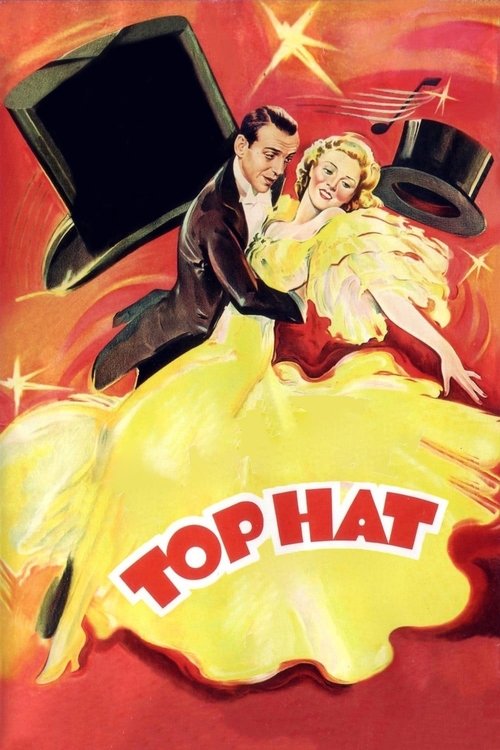
Top Hat
1935
No user ratings available yet
Representation score: 0.4 out of 10

Representation Score
Minimal
1943
ApprovedDirector
Roy Del Ruth
Runtime
101 minutes
Average Rating
No ratings yetNew Showbiz Analysis
Du Barry Was a Lady is a quintessential product of the Golden Age of Hollywood, designed for escapism rather than social commentary. The narrative reinforces traditional hierarchies of gender and class through a romanticized historical fantasy. The film lacks complexity in representing multiple aspects of identity, focusing instead on established genre clichés. While the female lead shows significant control over her own story, this is contained within existing patriarchal structures. Ultimately, the production adheres to the homogeneous demographic and social standards of its era, prioritizing conventional romantic arcs over diverse representation.
Category Breakdown
The film follows a traditional structure centered around heterosexual relationships. Romantic conflicts revolve around courtship and marriage for socioeconomic reasons.
Female characters like May Daly take control through charm and romantic negotiation within a male-dominated hierarchy.
The production features a predominantly white, European cast reflecting the historical French setting and the homogeneous casting norms of the 1940s.
The story functions as an escapist musical prioritizing romance over systemic critique. It depicts aristocratic hierarchies as a backdrop for fantasy.
There are no prominent depictions of visible or invisible disabilities. Physical impairments are not used as central narrative drivers.
Present on Screen
Limited or Absent
Official Synopsis
Hat check man Louis Blore is in love with nightclub star May Daly. May, however, is in love with a poor dancer but wants to marry for money. When Louis wins the Irish Sweepstakes, he asks May to marry him and she accepts even though she doesn't love him. Soon after, Louis has an accident and gets knocked on the head, where he dreams that he's King Louis XV pursuing the infamous Madame Du Barry.
1935
1948
1932
1937
1933

1953
1935

1936
No reviews yet. Be the first to share your thoughts on this movie!
Use the rating form above to leave a star rating and optional review.