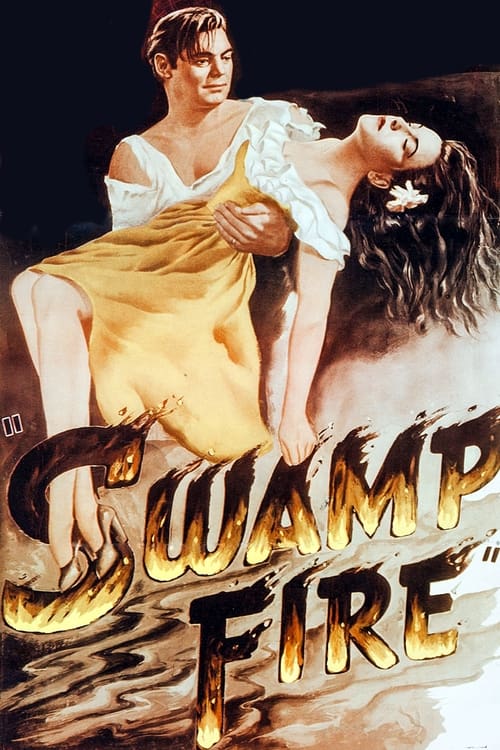
Swamp Fire
1946
No user ratings available yet
Diversity score: 2.1 out of 10

1950
ApprovedDirector
Ray Nazarro
Runtime
69 minutes
Average Rating
No ratings yetSynopsis
Set in a rugged Northwest logging camp, this drama follows the exploits of the lumberjack who inherits the camp. For a long time, he has been courting a pretty young thing, and now that she believes him wealthy, she decides to finally accept his proposal. When she finds out that the company has many financial woes and that living in the woods takes guts and courage, she turns into a nagging shrew, constantly urging him to sell-out to a major corporation. Meanwhile his treacherous foreman, an agent of the bigger company, uses sabotage to change the stubborn camp owner's mind.
Overall Score
Minimal
Category Breakdown
LGBTQ+ Representation
The film adheres to strict mid-century heteronormative structures. There is no evidence of non-cisnormative identities or same-sex intimacy, as the romantic arc focuses entirely on traditional courtship.
Gender Representation
Gender hierarchies are reinforced through restrictive tropes. The female lead lacks agency, transitioning from a romantic interest to a 'nagging shrew' who acts as a domestic obstacle to the protagonist.
Racial & Ethnic Diversity
The setting functions as a culturally monolithic space. The narrative lacks a multi-ethnic cast, presenting a homogeneous social environment typical of 1950s frontier dramas.
Religious & Cultural Diversity
The story operates within a traditional Western framework. It prioritizes individual grit and perseverance over any significant subversion of institutional values or complex cultural critiques.
Disability Representation
The film focuses on idealized physical capability and ruggedness. There is no representation of neurodivergence, chronic illness, or characters with visible or invisible disabilities.
Strengths
Areas for Improvement
AI Analysis
The film is a conventional mid-century drama that reinforces established social hierarchies. It relies heavily on traditional gender tropes and a homogeneous cast, offering little intersectional depth. Narrative agency is coded as masculine, while female characters are relegated to emotional volatility. The setting lacks racial complexity, functioning instead as a monolithic environment centered on rugged physical labor. Ultimately, the work adheres to the period's standard social norms. It provides no significant disruption to conventional cultural expectations or gendered relationship models.
1946
1949

1946
1953
No reviews yet. Be the first to share your thoughts on this movie!
Use the rating form above to leave a star rating and optional review.