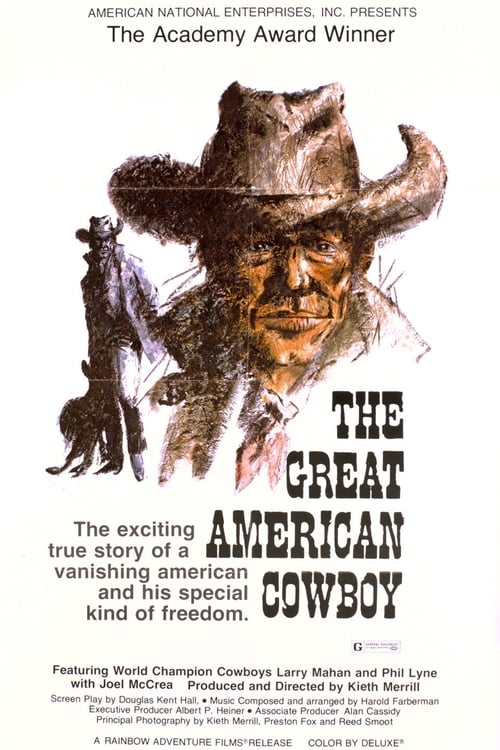
The Great American Cowboy
1973
No user ratings available yet
Representation score: 1.2 out of 10
Representation Score
Minimal
1969
NRDirector
Carroll Ballard
Runtime
20 minutes
Average Rating
No ratings yetNew Showbiz Analysis
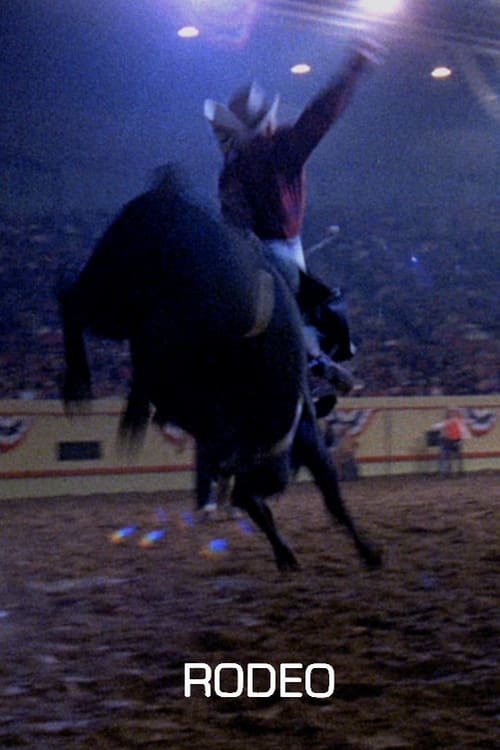
Rodeo (1969) acts as a historical document preserving the traditional social hierarchies of the late 1960s American West. The film emphasizes the struggle between man and beast, reinforcing conventional masculine ideals of dominance and resilience. While the documentary captures a specific sporting heritage, it lacks diversity across most social categories. The cast and cultural themes align with the homogeneous, Anglo-centric demographics of the professional rodeo circuit during this era. Ultimately, the film does not seek to challenge or expand social norms. Instead, it documents a specific cultural moment through a lens of traditional values and physical prowess.
Category Breakdown
The film does not include any LGBTQ+ characters or narratives, focusing solely on the traditional sporting culture of the late 1960s.
The story centers on masculine figures emphasizing strength and dominance. Myrtis Dightman's participation highlights her struggle to meet the established masculine standards within the sport.
The documentary reflects the homogeneous social structures of the late 1960s rodeo circuit. Figures like Freckles Brown and Larry Mahan embody the traditional Anglo-American cowboy archetype.
The film celebrates traditional Western frontier values and rugged individualism. It honors a specific cultural institution without offering any secular or systemic critique.
There is no depiction of neurodivergence or physical disabilities in the film. The subject matter focuses exclusively on the peak physical performance of athletes and animals.
Present on Screen
Limited or Absent
Official Synopsis
Shot in four days during the 1968 National Rodeo Finals in Oklahoma City, this lyrical documentary takes you inside the arena atop a 2800 lb bull. Watch Freckles Brown, a legendary cowboy, conferring with a young Larry Mahan, the previous year's champion and see crowd favorite Myrtis Dightman trying to hold his own in a dramatic ride. "Rodeo" shows the classic struggle of man against beast, a matter of life and death. Dick Rosmini's hypnotizing folk-fusion soundtrack and an intricate sound mix add to the climatic result.
1973
2006
1989
2012
1967
1957
1931
1948
No reviews yet. Be the first to share your thoughts on this movie!
Use the rating form above to leave a star rating and optional review.