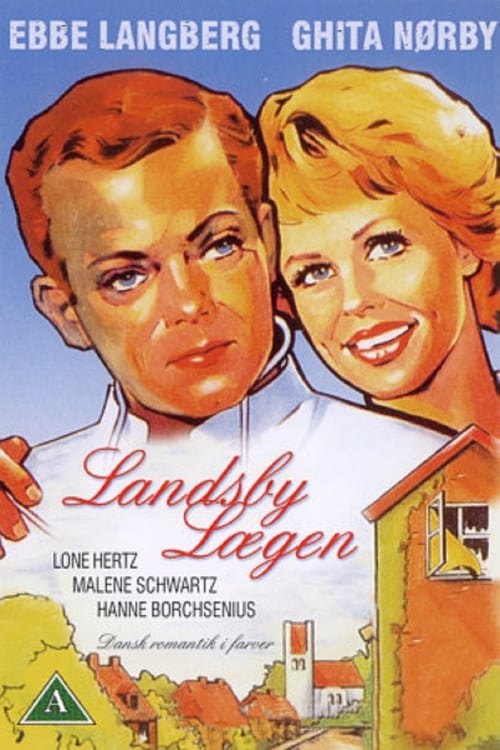
Landsbylægen
1961
No user ratings available yet
Representation score: 2.0 out of 10
Representation Score
Minimal
1964
Director
Anker Sørensen
Average Rating
No ratings yetNew Showbiz Analysis
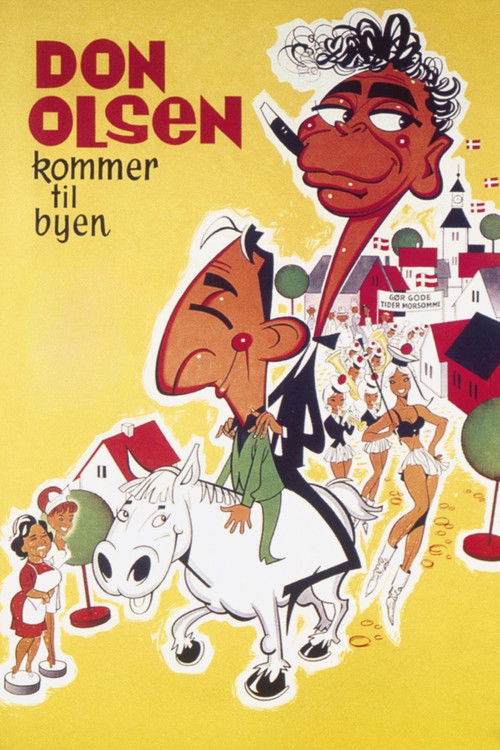
Don Olsen Comes to Town is a product of its 1964 era, adhering to the conventional comedic structures of mid-century Danish cinema. The film prioritizes traditional social hierarchies and localized community dynamics over progressive storytelling. The narrative focuses on male social bonding and traditional romantic pursuits, lacking multi-layered complexity. Characters are defined by their roles within a culturally uniform, provincial setting. Ultimately, the film reflects its time by offering a standard depiction of social cohesion without attempting to disrupt established norms.
Category Breakdown
The film does not include any LGBTQ+ characters or non-cisgender identities. It focuses on traditional romantic relationships and male camaraderie.
Female characters such as Elsebeth and Miss Mortensen mainly serve as objects of desire for the male protagonist. The story reinforces traditional gender roles without giving women much control over their own lives.
The film is set in a 1964 Danish town and features an ethnically homogenous cast. There are no characters from diverse racial backgrounds.
The story emphasizes community cohesion and social scandal. It touches on populist sentiments but does not challenge Western institutions like family or capitalism.
There are no characters with visible or invisible disabilities in the film.
Present on Screen
Limited or Absent
Official Synopsis
Bank director L.W. Jacobsen resides in a small provincial town. He is not particularly interested in his wife, Elsebeth, but rather in teacher and city council member Miss Mortensen. Thorsen, the town's manufacturer, is a member of the same city council group as Jacobsen. Then Don Olsen comes to town. Olsen is not interested in the upper class, but rather in people. By chance, Thorsen and Olsen meet and soon become drinking buddies. Thorsen drags the milkman's horse home to his apartment in the middle of the night. The scandal is a reality. Thorsen wants to flee, but with Olsen's help, he instead woos the townspeople and Miss Mortensen under the motto "Make good times better."
1961
1958
1953
1958
1973
1961
1963

1957
No reviews yet. Be the first to share your thoughts on this movie!
Use the rating form above to leave a star rating and optional review.