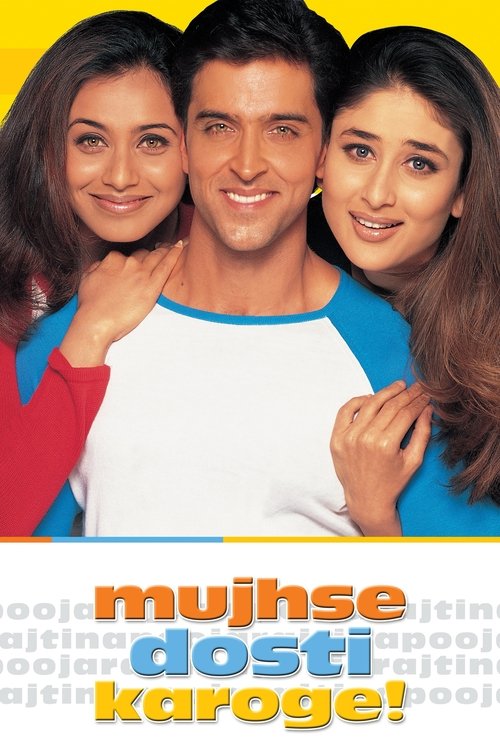
Mujhse Dosti Karoge!
2002
No user ratings available yet
Representation score: 1.3 out of 10
Representation Score
Limited
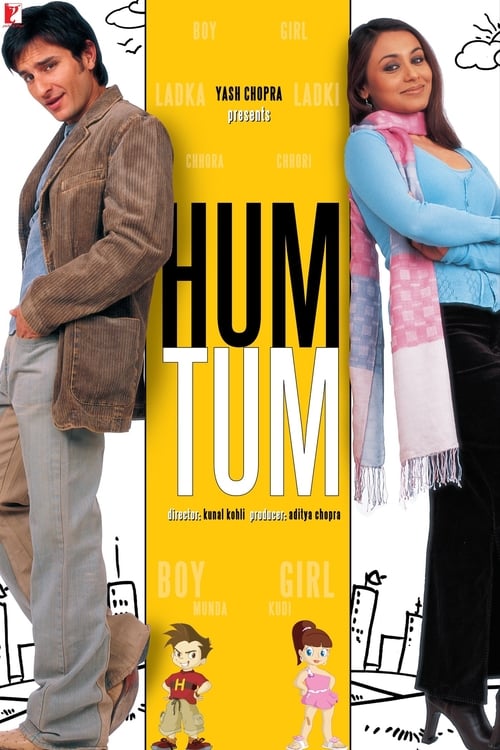
2004
Not RatedDirector
Kunal Kohli
Runtime
142 minutes
Average Rating
No ratings yetNew Showbiz Analysis
Hum Tum is a character-driven romantic drama that prioritizes interpersonal evolution over social critique. Its primary strength lies in its gender dynamics, where the female protagonist provides the structural stability often reserved for male leads in mainstream cinema. However, the film operates within a very narrow social lens. It focuses on a specific socioeconomic demographic and maintains a traditional moral framework, offering little engagement with broader identity politics or diverse cultural intersections. Ultimately, while the film offers nuanced personality archetypes, it remains a conventional narrative that avoids systemic deconstruction or subversive representation.
Category Breakdown
The film follows a strictly straight-centered path, focusing entirely on the romantic connection between a man and a woman without exploring non-cisgender identities.
The story challenges typical gender clichés by giving the female lead, Ritu, a significant role in driving the story. She acts as the stabilizing force against Karan's impulsive, non-conformist behavior.
The cast presents a homogeneous view of urban, middle-to-upper-class Indian life. It lacks intentional blending of diverse ethnic backgrounds within the main characters.
The narrative adheres to conventional social and familial structures. It emphasizes traditional romantic commitment and personal growth rather than challenging systemic or moral frameworks.
The characters are depicted within the context of able-bodied urban life. No visible or invisible disabilities are featured in the central story arc.
Present on Screen
Limited or Absent
Official Synopsis
The encounters of two people who run into each other on several occasions under circumstances ranging from friendly to hostile to loving. Along many years and countless run-ins, the two despise each other, befriend each other, and fall in love with each other—in no particular order.
2002

2003
2005
2011
2015

2016

2012
2003
No reviews yet. Be the first to share your thoughts on this movie!
Use the rating form above to leave a star rating and optional review.