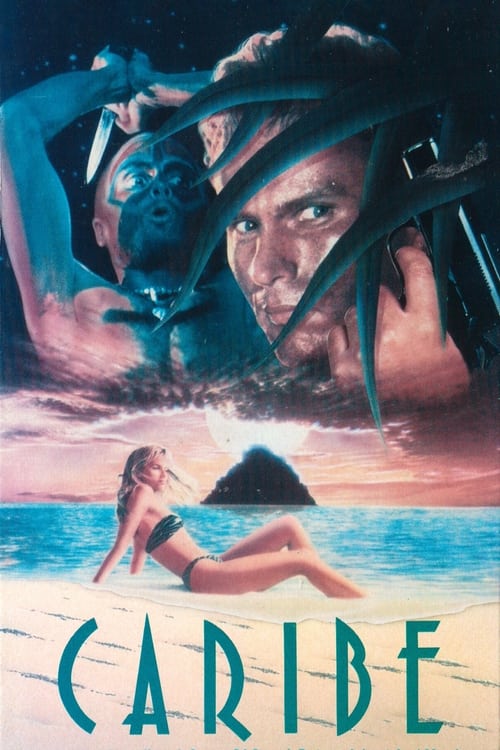
Caribe
1987
No user ratings available yet
Representation score: 3.4 out of 10
Representation Score
Minimal
1932
PassedDirector
Alberto Mendez Bernal
Runtime
63 minutes
Average Rating
No ratings yetNew Showbiz Analysis
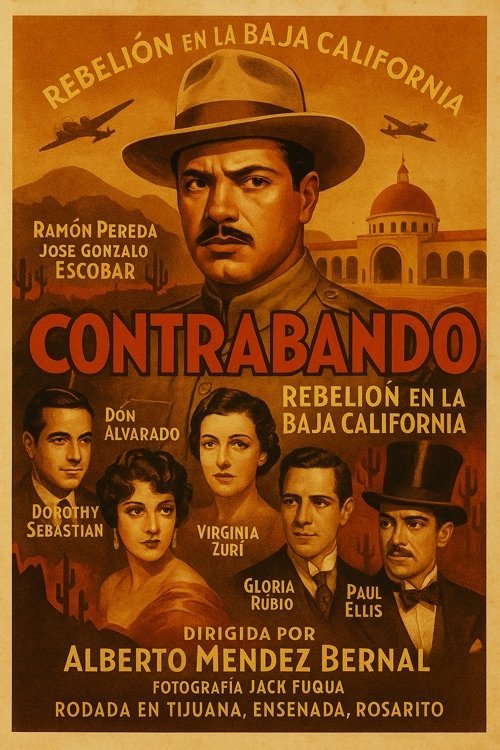
Contrabando is a product of early 1930s transnational cinema, emphasizing adventure and political turmoil over social critique. The narrative adheres to the era's conventional storytelling, centered on a millionaire's uprising and the ensuing military response. While the film uses Mexican settings and explores themes of national sovereignty, it does not challenge existing social hierarchies. Characters mostly serve as archetypes within a traditional drama, with much of the plot driven by male-centric political conflict. Ultimately, the film functions as a typical adventure-drama of the period, emphasizing the restoration of state order and traditional romantic resolutions.
Category Breakdown
The film does not include any LGBTQ+ characters or non-straight identities. The romance focuses solely on a traditional relationship between Carlos and Lolita.
Lolita plays a key role in the romantic storyline, but her influence is heavily dependent on the male protagonist's legal victory. The main plot revolves around male-driven political and military events.
The film is set in Tijuana and Ensenada, Mexico, providing a local backdrop for a cross-border story. However, the narrative leans on typical regional stereotypes and power dynamics of the time.
The story draws from the 1929 Escobar Rebellion, highlighting political resistance. It ultimately upholds institutional authority by showing the restoration of order through military and legal measures.
There are no characters with visible or invisible disabilities in the film.
Present on Screen
Limited or Absent
Official Synopsis
Contrabando is an adventure film. The film tells of the millionaire Hernández who smuggles weapons from the United States into Mexico. He does this because he is planning an uprising. The hotel attendant Carlos is informed of this. Hernández and his troops are defeated by the army. Carlos is acquitted and can marry his lover Lolita. The film Contrabando was shot in locations on the border with the United States, such as Tijuana, Ensenada and Playas de Rosarito. It was shot in Spanish and in English under the title Contraband. The role of Lolita was cast for the English version with Dorothy Sebastian. Contrabando's plot was inspired by an actual 1929 rebellion led by José Gonzalo Escobar.
1987
1937
1977
1993
1950
1937

1955
1949
No reviews yet. Be the first to share your thoughts on this movie!
Use the rating form above to leave a star rating and optional review.