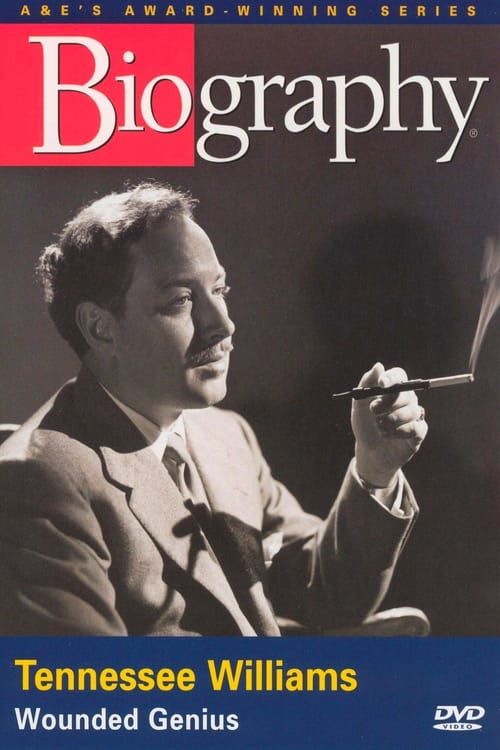
Tennessee Williams: Wounded Genius
1998
No user ratings available yet
Diversity score: 6.9 out of 10

1994
TV-14Director
Merrill Brockway
Runtime
86 minutes
Average Rating
No ratings yetSynopsis
A study of Tennessee Williams's life and work as a whole, ranging from his youth in Mississippi and in St. Louis to success and acclaim, followed by the final difficult years. Includes some of the most celebrated scenes from film adaptations of Williams' work, among them extracts of A Streetcar Named Desire (1951),Cat on a Hot Tin Roof (1958), Night of the Iguana, The (1964), and Suddenly, Last Summer (1993) (TV). Contains footage of Williams being interviewed, including conversations with David Frost, 'Edward R. Murrow (I)', and Melvyn Bragg, as well as reminiscences from people who knew and worked with him, among them Edward Albee, Gore Vidal, and his lifelong friend, Lady Maria St. Just. Features readings from Elia Kazan's Notebook by Kim Hunter.
Overall Score
Good
Category Breakdown
LGBTQ+ Representation
The film offers a sophisticated look at queer identity through Williams's outsider status. It validates non-cisnormative experiences by examining the tension between private reality and societal constraints. Figures like Gore Vidal help center queer perspectives.
Gender Representation
The documentary critiques mid-century masculinity by highlighting characters who struggle against rigid gender roles. It focuses on the psychological complexity of those who fail to meet traditional patriarchal archetypes.
Racial & Ethnic Diversity
Focus remains on the racial landscapes within Williams's plays rather than a diverse cast. It provides context for how race and social hierarchy functioned within the American South.
Religious & Cultural Diversity
The film deconstructs the 'Old South,' portraying it as a decaying structure of religious repression. It prioritizes human desire as a valid counter-narrative to oppressive social propriety.
Disability Representation
Mental health and psychological fragility are explored as part of a broader study of existential loneliness. These elements remain secondary to the primary biographical and literary themes.
Strengths
Areas for Improvement
AI Analysis
This documentary functions as a semiotic study of the tension between individual impulse and restrictive social structures. It moves beyond simple biography to analyze how Williams's work deconstructs traditional Southern identity and the psychological costs of heteronormative expectations. The film's strength lies in its intellectual depth, utilizing contemporaries like Gore Vidal to frame queer identity as central to the American canon. It successfully critiques traditionalist hegemony by framing the struggle of the individual against systemic religious and social institutions. However, the focus is inherently narrow due to its biographical subject. While it addresses racial dynamics and psychological struggles, these elements serve the broader literary analysis rather than acting as primary drivers of diversity.
1998
2010

2014

2017
1990

2022

2022
1984
2006
2013

2018
2014
No reviews yet. Be the first to share your thoughts on this movie!
Use the rating form above to leave a star rating and optional review.