
The Courier
2020
No user ratings available yet
Representation score: 1.4 out of 10
Representation Score
Minimal
2000
PG-13Director
Roger Donaldson
Runtime
145 minutes
Average Rating
No ratings yetNew Showbiz Analysis
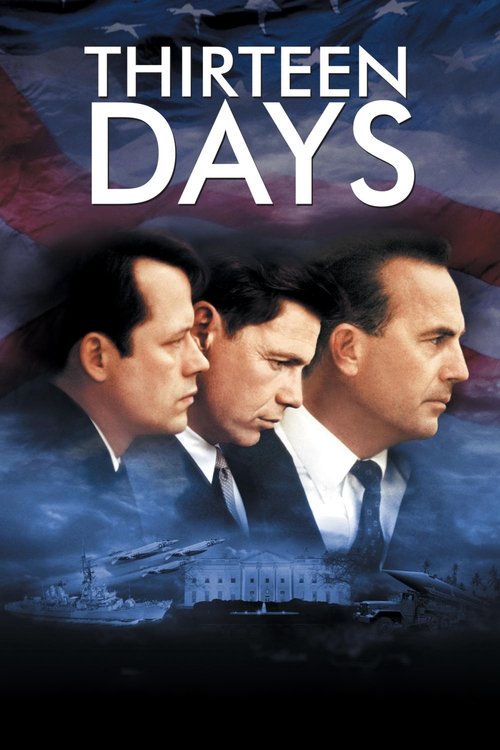
Thirteen Days functions as a historical procedural that prioritizes period accuracy over modern characters who reflect more than one aspect of diversity. By focusing on the specific social and political landscape of 1962, the film reinforces traditional hierarchies. The story centers on the mechanics of institutional power, particularly the masculine-dominated ExComm. By maintaining a narrow demographic scope, the film adheres to the era's lack of diversity. Ultimately, the film lacks the intentionality to disrupt conventional expectations of representation, opting instead for a traditional approach to storytelling.
Category Breakdown
The film does not include any LGBTQ+ characters or queer subtext. It focuses solely on Cold War geopolitical tensions.
Decision-making is shown through an exclusively male perspective. Women are not present in the central political and military discussions, reinforcing the patriarchal structures of 1962.
The cast is uniform, reflecting the demographic realities of the 1960s American political elite. There is a lack of racial diversity among the central leadership roles.
The narrative operates within a framework of Western institutionalism. It emphasizes pragmatic statecraft and the preservation of the existing global order.
There is no representation of physical, sensory, or neurodivergent disabilities. Disability is not used as a narrative device or for character development.
Present on Screen
Limited or Absent
Official Synopsis
The story of the Cuban Missile Crisis in 1962—the nuclear standoff with the USSR sparked by the discovery by the Americans of missile bases established on the Soviet-allied island of Cuba.
2020

1964

2002

1955

2014

1975

2006

1969
No reviews yet. Be the first to share your thoughts on this movie!
Use the rating form above to leave a star rating and optional review.