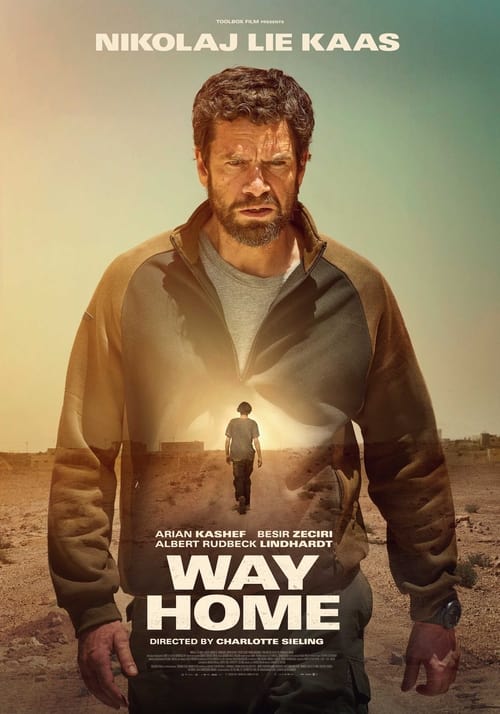
Way Home
2024
No user ratings available yet
Representation score: 8.2 out of 10

Representation Score
Fair
2008
Director
Jean van de Velde
Runtime
115 minutes
Average Rating
No ratings yetNew Showbiz Analysis
The Silent Army successfully shifts focus away from Western exceptionalism by making the African setting a key driver of the plot rather than a passive backdrop. The inclusion of Abu as a central figure provides essential tension and critique within a post-colonial context. However, the film remains limited in its exploration of identity. The narrative is heavily centered on male experiences and the traditional nuclear family, leaving little room for queer representation or the subversion of gender roles. Overall, the film is a geopolitical drama that prioritizes systemic critique and racial diversity over a broader range of social identities.
Category Breakdown
The film does not include explicit representations of LGBTQ+ characters or identities that go beyond the assumption that everyone is straight. The story focuses solely on the relationship between a father and his son within a traditional nuclear family structure.
The story revolves around a male protagonist dealing with life after his wife's death. It emphasizes male struggles with parental authority without challenging traditional gender roles or empowering female characters.
The film addresses diversity by placing a Western protagonist in an African setting. The character Abu plays a central role in creating tension and moving the narrative forward.
The plot challenges Western comfort by focusing on the instability of a non-Western state. It critiques global stability through the lens of child soldiering and systemic survival.
The film does not feature any characters with physical or neurodivergent disabilities.
Present on Screen
Limited or Absent
Official Synopsis
Eduard Zuiderwijk (Marco Borsato) runs a restaurant in Africa. When his wife (Ricky Koole) suddenly dies, he is left to take care of his son Thomas (Siebe Schoneveld) on his own. When his son's best friend Abu (Andrew Kintu) is abducted by a rebel leader to be trained as a child soldier, Eduard goes in pursuit to save the boy and regain his son's respect.
2024
2012

2014

2005
2001
2006
2006

2011
No reviews yet. Be the first to share your thoughts on this movie!
Use the rating form above to leave a star rating and optional review.