
A Time to Love and a Time to Die
1958
No user ratings available yet
Diversity score: 4.7 out of 10
1943
Not RatedDirector
Sidney Gilliat, Frank Launder
Runtime
103 minutes
Average Rating
No ratings yetSynopsis
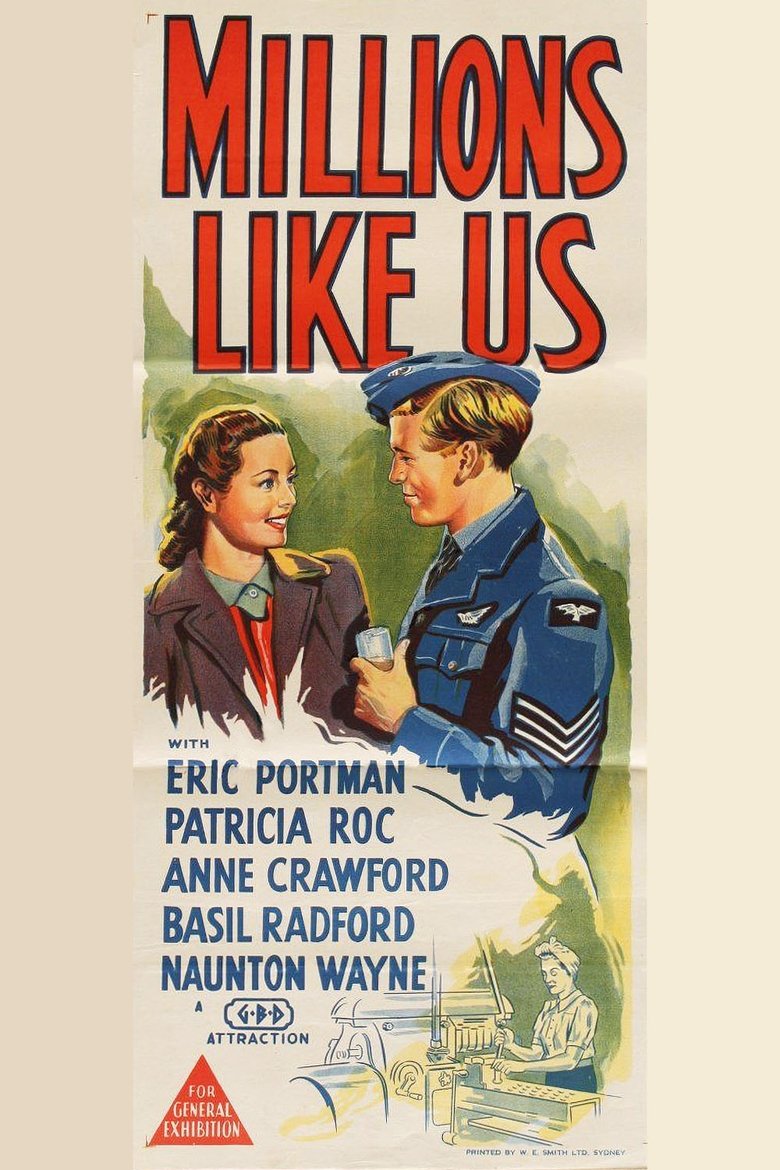
When Celia Crowson is called up for war service, she hopes for a glamorous job in one of the services, but as a single girl, she is directed into a factory making aircraft parts. Here she meets other girls from all different walks of life and begins a relationship with a young airman.
Overall Score
Limited
Category Breakdown
LGBTQ+ Representation
The film adheres to 1940s social constraints by focusing on heteronormative romantic arcs. The central relationship between the protagonist and an airman reinforces traditional wartime social structures.
Gender Representation
The narrative disrupts domestic spheres by placing women in active industrial roles. Celia Crowson’s transition into aircraft manufacturing highlights female agency and essential contributions to national infrastructure.
Racial & Ethnic Diversity
The cast is largely homogeneous, reflecting the historical context of 1943 Britain. The story focuses on British class stratification rather than a multi-ethnic or post-colonial framework.
Religious & Cultural Diversity
The film promotes a collective national identity and the preservation of Western institutions. It offers a subtle critique of rigid class hierarchies in favor of a unified social fabric.
Disability Representation
There is no significant evidence of characters with visible or invisible disabilities serving as central narrative drivers or plot devices.
Strengths
Areas for Improvement
AI Analysis
Millions Like Us serves as a period-specific document that prioritizes socioeconomic intersectionality over modern standards of racial or sexual orientation diversity. It succeeds in deconstructing the British class system by elevating working-class agency through the lens of wartime necessity. The film's strength lies in its portrayal of female industrial labor and the dissolution of aristocratic distance. It captures a moment where social cohesion is driven by collective duty and shared national purpose. However, the production remains limited by its historical context, lacking ethnic diversity and non-cisnormative identities. It functions more as a study of internal class blending than a diverse multi-cultural narrative.
1958

1953

1944

1940

1945

1949
No reviews yet. Be the first to share your thoughts on this movie!
Use the rating form above to leave a star rating and optional review.