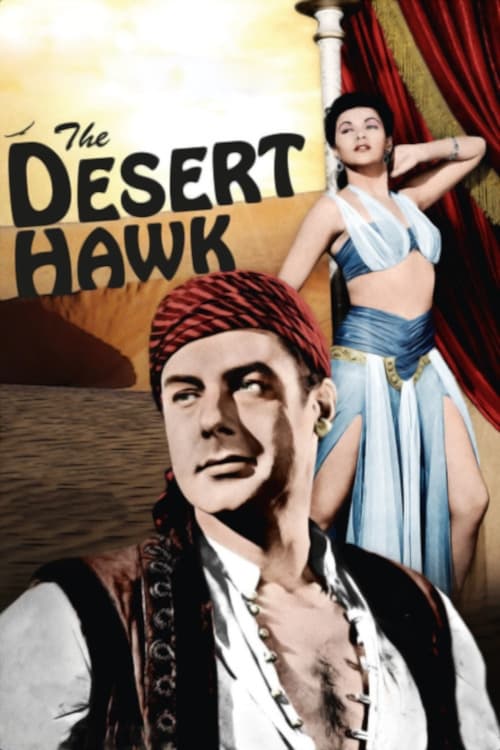
The Desert Hawk
1950
No user ratings available yet
Representation score: 1.1 out of 10

Representation Score
Minimal
1944
ApprovedDirector
B. Reeves Eason
Runtime
285 minutes
Average Rating
No ratings yetNew Showbiz Analysis
The Desert Hawk is a classic mid-century adventure film that follows the established norms of 1940s cinema. Its narrative prioritizes clear-cut moral and political themes over social critique. The film relies on traditional hierarchies and romantic clichés. Characters tend to fit into rigid roles, such as women being used as political tools and men driving the main action. Set in an exoticized Middle Eastern backdrop, the film reinforces traditional social orders and monarchical stability without challenging them.
Category Breakdown
The film follows a traditional structure where everyone is assumed to be straight. The plot centers on a royal marriage between the Emir and Princess Azala, with no indication of same-sex relationships.
Gender roles are very traditional. Men lead the main conflicts, while Princess Azala is used mainly for political purposes, like a tool for diplomacy.
The film sets its story in an exotic Middle Eastern landscape, using the 'exotic other' cliché to create adventure elements. This portrayal simplifies and stereotypes the culture.
The story focuses on restoring a rightful ruler and maintaining the Caliphate. It upholds traditional social structures and institutions without questioning them.
Kasim's injury serves as a typical plot device for recovery. There is no detailed exploration of physical or neurodivergent disabilities in the film.
Present on Screen
Limited or Absent
Official Synopsis
Evil Hassan slips back into his native land of Ahad and plots to overthrow his twin bother, Kasim, who has just been crowned the Caliph. Hassan enlists the aid of the chief Chamberlain, Faud and they send several henchmen into the royal palace, who then knock Kasim unconscious. Faud and Hassan dispatch a couple of different hirelings to take Kasim into another part of the town and murder him.Kasin comes to and gets away, but has been wounded. Omar, a beggar, takes Kasim to his home and nurses him back to health. But, it takes a few weeks for Kasin to get healthy and, by that time, Hassan has a firm grip on the duties of a Caliph. In a storeroom, Kasim finds a coat of mail with a great hawk emblazoned across the chest and promptly decides this is the costume he will wear while fighting to get his old job back. Meanwhile, the Emir of Telif shows up with his daughter, Princess Azala, with the intent of marrying her off to the local Caliph.
1950
1959

1953
1940
1944
1924
1951
1954
No reviews yet. Be the first to share your thoughts on this movie!
Use the rating form above to leave a star rating and optional review.