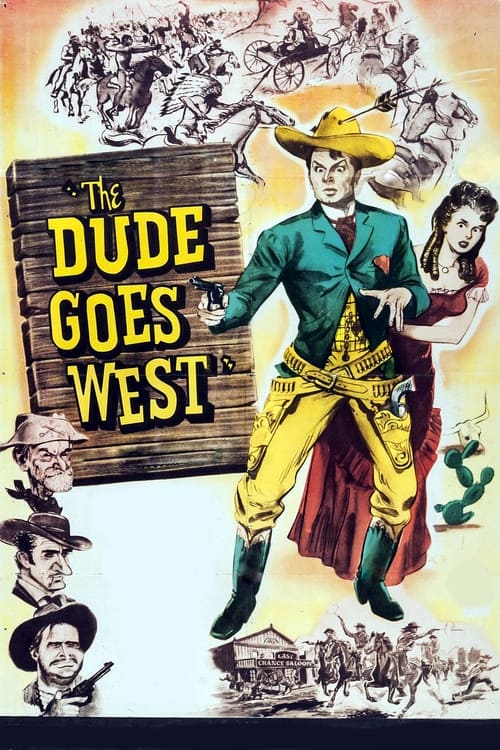
The Dude Goes West
1948
No user ratings available yet
Representation score: 1.7 out of 10

Representation Score
Minimal
1952
ApprovedDirector
Norman Foster
Runtime
73 minutes
Average Rating
No ratings yetNew Showbiz Analysis
Sky Full of Moon opens with a sun-bleached Texas landscape, establishing a B-Western aesthetic where the environment is a character in its own right. The film sells a vision of "natural" masculinity triumphing over "civilized" constraints, positioning the rugged cowboy as the moral and physical ideal. Carleton Carpenter’s Harley is framed in wide shots that emphasize his connection to the land, while Jan Sterling’s Dixie is bathed in soft-focus beauty lighting, marking her as the prize to be won. The camera loves Harley’s authenticity, treating his roughness as a virtue rather than a flaw, and rewards his union with Dixie as a natural, correct outcome. The film’s argument is straightforward: authenticity and naturalness are superior to social convention. Harley’s "wild" behavior is framed as virtuous, while the casino’s urban commerce is treated as a temporary, less authentic space. The ending, with the couple standing together in the open, reinforces this hierarchy, suggesting that their union is the natural order. The film’s internal logic is consistent, with Harley’s competence and Dixie’s beauty as the primary drivers of the plot. However, the film’s treatment of gender and race is limited by its era, with Dixie’s agency confined to her romantic choice and the cast entirely white. The film is a product of its time, reflecting the 1952 Production Code’s norms and the B-Western’s conventions. It is a simple, straightforward romance that celebrates the union of the "wild" man and the "civilized" woman, with no subversive elements or complex character dynamics. The film’s value lies in its historical context and its adherence to genre conventions, rather than in any innovative or progressive themes.
Category Breakdown
No queer characters or relationships appear. The romance is strictly heterosexual, adhering to 1952 Production Code norms. The film offers no alternative family structures or identities.
Dixie serves as the visual prize and moral compass, yet her agency is confined to choosing Harley. Harley remains the competence center, winning money and the woman through rugged authenticity.
The cast is entirely white. The Las Vegas and rodeo settings contain no non-white characters, treating the frontier as an empty, homogeneous space.
The film contrasts the "wild" cowboy with the "civilized" casino, framing rural authenticity as morally superior to urban commerce. Traditional gender roles and merit-based luck are treated as natural and good.
No characters with disabilities appear. Physical ability is idealized through Harley’s rodeo skills and Dixie’s conventional beauty, with no impairment depicted.
Present on Screen
Limited or Absent
Official Synopsis
A cowboy seeks fame and fortune in Las Vegas where he meets a girl working in a casino.
1948
1960
1950
1965
1944

1925
1944
1939
No reviews yet. Be the first to share your thoughts on this movie!
Use the rating form above to leave a star rating and optional review.