
Under the Carp Banner
1992
No user ratings available yet
Representation score: 3.2 out of 10
Representation Score
Fair
2009
Director
Masayuki Miyano
Runtime
94 minutes
Average Rating
No ratings yetNew Showbiz Analysis
Lala Pipo offers a cynical deconstruction of the urban social contract in Tokyo. It challenges traditional gender hierarchies by centering women's ability to drive the story and portraying men through a lens of moral decay. This provides a nuanced look at human connections within oppressive economic frameworks. However, the film is limited by its homogeneity. The narrative remains a localized study of Japanese life, lacking racial diversity or representation of various ethnic perspectives. This keeps the scope narrow and culturally specific. Ultimately, the film's strength lies in its systemic critique. By focusing on the 'lost souls' of the sex industry, it challenges traditional social institutions and explores the complexities of situational ethics.
Category Breakdown
The film touches on themes related to sexual fluidity and non-traditional intimacy. While specific LGBTQ identities are not confirmed, the narrative explores themes of bodily autonomy and desire.
Women play a significant role in driving the story as they navigate the sex industry. Men are often portrayed through a lens of inadequacy, self-loathing, and moral decay.
The story focuses on a localized study of Tokyo life. The cast appears largely homogeneous, with no evidence of significant racial blending or diverse ethnic perspectives.
The film critiques traditional social structures and capitalist pressures. It presents characters as complex individuals shaped by a predatory urban environment, rejecting singular morality.
There is no specific evidence regarding the portrayal of physical or neurodivergent disabilities within the narrative.
Present on Screen
Limited or Absent
Official Synopsis
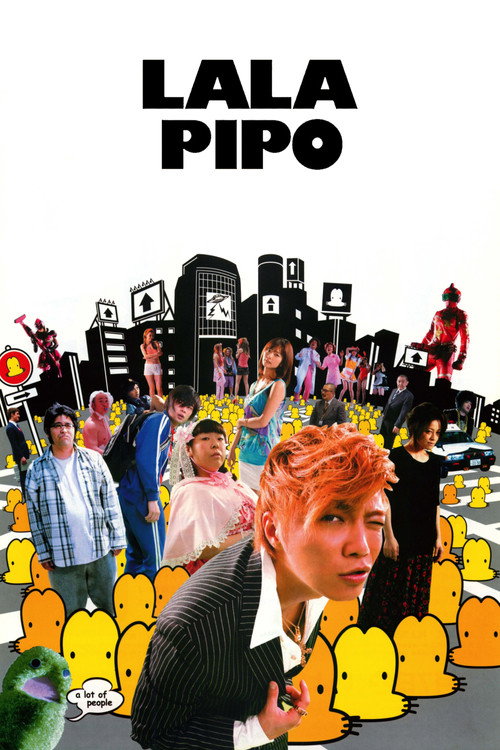
Adapted from a sex-stuffed cult novel, LALAPIPO (a play on the phrase “A Lot of People”) follows divergent seedy strands of sexual and narrative spaghetti through the sticky Tokyo night. There’s a chubby freelance writer who’s so obsessed with masturbating to the sound of his upstairs neighbors going at it that he forgets to deal with his own love life and when he finally does have sex he is immediately filled with self-loathing. The upstairs neighbor’s story then splits off like an amoeba: she’s an office lady seduced by a “talent scout” who is falling down the sex industry ladder, moving from hostess, to massage girl, to private karaoke attendant. The talent scout’s story then splits off and runs in its own direction, revealing the sorry state of this young pimp’s soul. From there, the movie takes more and more time to consider the lives of more and more characters until the entire Japanese sex industry is filled with the wailing of lost souls.
1992

2001

2004

1956

2004

2011

1995

2014
No reviews yet. Be the first to share your thoughts on this movie!
Use the rating form above to leave a star rating and optional review.