
Kekko Kamen New
2003
No user ratings available yet
Representation score: 5.4 out of 10

Representation Score
Good
2015
MDirector
Eiichiro Hasumi
Runtime
110 minutes
Average Rating
No ratings yetNew Showbiz Analysis
Assassination Classroom succeeds in challenging traditional authority structures and empowering underrepresented individuals. It effectively critiques rigid institutional hierarchies and the pressures of modern meritocracy through its unique premise. However, the film lacks diversity in its demographic representation. The cast remains largely homogeneous, and the story does not provide much visibility for LGBTQ+ identities or diverse ethnic backgrounds. Ultimately, the film's strength lies in its conceptual approach rather than in demographic representation. It finds its impact in deconstructing authority and validating the empowerment of those overlooked by traditional systems.
Category Breakdown
The film adheres to typical genre conventions and does not include explicit LGBTQ+ characters. It does not significantly challenge the assumption that everyone is straight or cisgender.
The story overturns traditional male-dominated academic hierarchies by focusing on student empowerment. Koro-sensei serves as a non-gendered, nurturing mentor who emphasizes emotional intelligence over conventional authority.
As a Japanese production, the cast is primarily homogeneous. While it examines social stratification, it does not offer broad representation of different racial or ethnic backgrounds.
The film offers a nuanced critique of the educational system. It breaks down the teacher-student relationship and questions the oppressive nature of meritocratic structures.
The narrative explores social disabilities by highlighting students underrepresented due to academic performance. These characters gain empowerment through unconventional mentorship that transforms perceived weaknesses into strengths.
Present on Screen
Limited or Absent
Official Synopsis
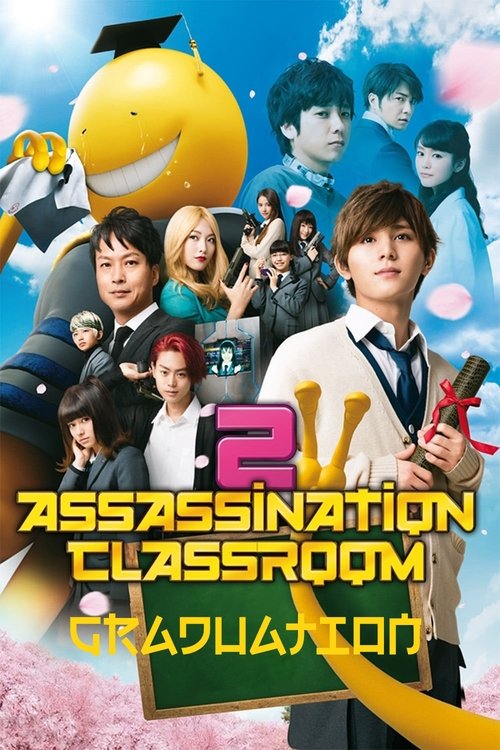
A mysterious creature destroys part of the moon and then warns that, if it is not destroyed before March of the following year, Earth will be next. It also demands to become the homeroom teacher of Class E, a third-year class at Kunugigaoka High School.
2003

2010
2016

2021

2026

2004

2016

2013
No reviews yet. Be the first to share your thoughts on this movie!
Use the rating form above to leave a star rating and optional review.