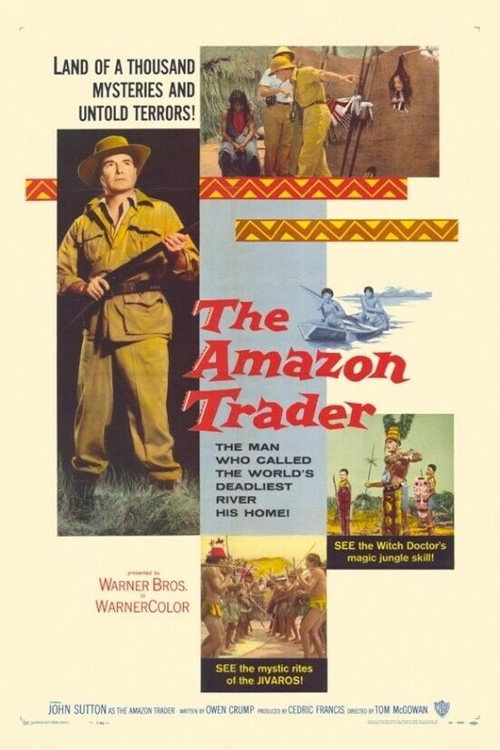
The Amazon Trader
1956
No user ratings available yet
Diversity score: 2.5 out of 10
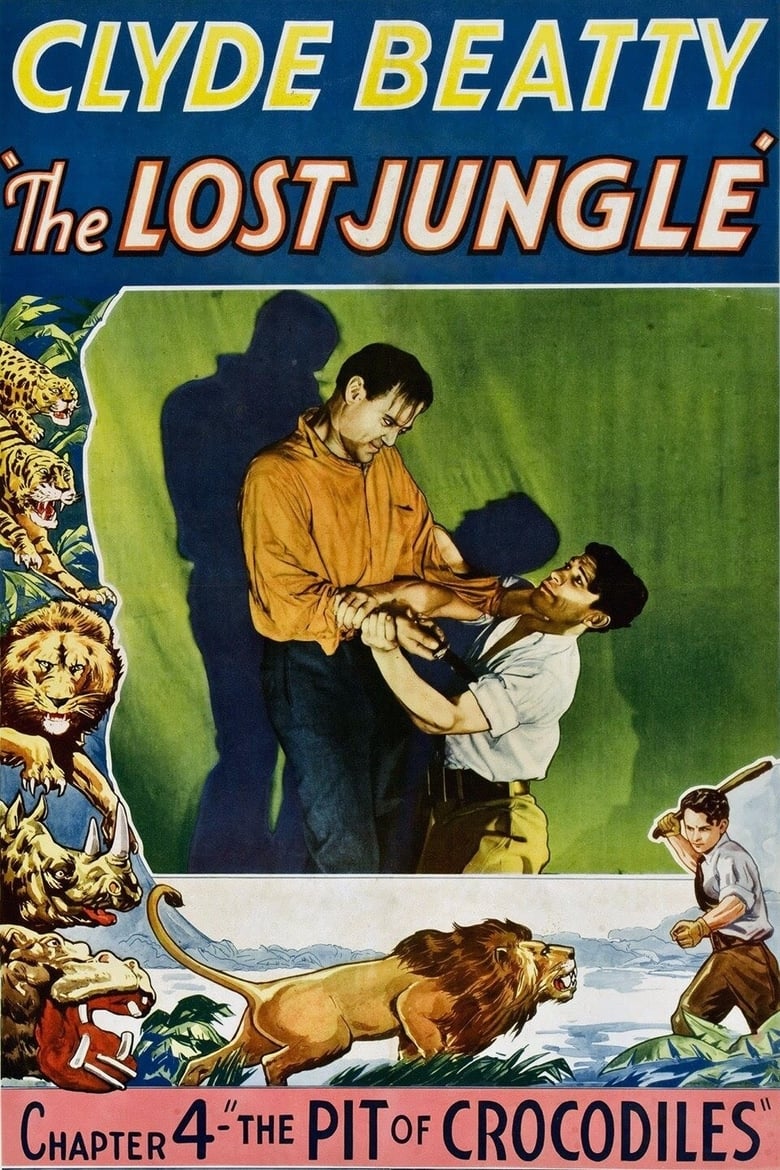
1934
ApprovedDirector
Armand Schaefer, David Howard
Runtime
243 minutes
Average Rating
No ratings yetSynopsis
12 part movie serial where Clyde Beatty encounters obstacles and adventure on his way to rescue his damsel in distress.
Overall Score
Limited
Category Breakdown
LGBTQ+ Representation
The serial lacks any evidence of LGBTQ+ characters or narratives. It adheres to the conventional romantic dynamics typical of 1930s adventure cinema.
Gender Representation
The plot relies on traditional gender hierarchies. A male protagonist performs heroic feats to rescue a female character, who remains a passive recipient of action.
Racial & Ethnic Diversity
The film likely reflects the homogeneous Western perspectives common to the era. It lacks evidence of diverse casting or high-agency characters of color.
Religious & Cultural Diversity
The narrative aligns with traditional Western adventure tropes. It promotes a singular, traditional morality centered on the hero's triumph over external obstacles.
Disability Representation
There is no documented evidence regarding the inclusion or portrayal of characters with physical or neurodivergent disabilities.
Strengths
Areas for Improvement
AI Analysis
The Lost Jungle is a quintessential product of the 1930s studio system, prioritizing genre tropes over narrative complexity. The story follows a standard hero-centric model that reinforces the era's social hierarchies. Gender roles are strictly defined, with the male lead driving the action while the female lead serves as a passive damsel. This structure lacks agency for women and fails to challenge traditional romantic archetypes. Culturally, the film appears to operate through a colonialist lens typical of jungle adventures from this period. It lacks intersectional depth, offering a narrow, Western-centric view of heroism and morality.
No reviews yet. Be the first to share your thoughts on this movie!
Use the rating form above to leave a star rating and optional review.