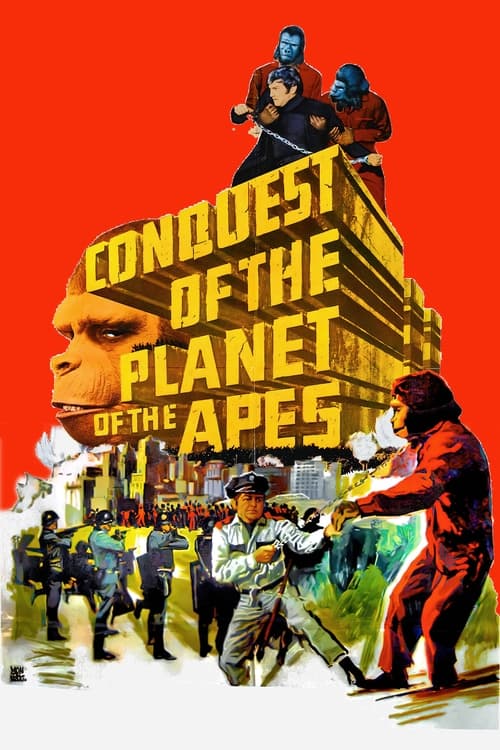
Conquest of the Planet of the Apes
1972
No user ratings available yet
Representation score: 4.9 out of 10

Representation Score
Fair
1973
GDirector
J. Lee Thompson
Runtime
93 minutes
Average Rating
No ratings yetNew Showbiz Analysis
Battle for the Planet of the Apes functions as a sophisticated metaphorical study rather than a traditional demographic showcase. While it lacks representation for LGBTQ+ identities and women, it uses its non-human cast to brilliantly critique social hierarchies and systemic power. The film's strength lies in its cultural commentary, specifically its anti-war stance and critique of technological hubris. By depicting the collapse of human civilization, it explores moral relativism and the ethics of survival. However, the film remains tethered to the patriarchal archetypes of its era. It lacks meaningful engagement with disability or neurodivergence, focusing instead on the broad strokes of societal collapse.
Category Breakdown
The film centers on species survival and inter-species diplomacy. There is no clear representation of LGBTQ+ identities or narratives that challenge the assumption that everyone is straight or cisgender.
Male figures like Caesar and Taylor play key roles. The ape society follows traditional patriarchal models of leadership and military command with little challenge to gender roles.
Different primate species represent social castes. This non-human cast explores complex social stratification and systemic power dynamics.
The film critiques Western technological advancement and the destruction of human institutions. It prioritizes survivalist ethics over traditional institutional stability in a post-nuclear world.
Characters with disabilities are not central figures. The focus remains on macro-societal struggles rather than individual physical or mental diversity.
Present on Screen
Limited or Absent
Official Synopsis
The fifth and final episode in the Planet of the Apes series. After the collapse of human civilization, a community of intelligent apes led by Caesar lives in harmony with a group of humans. Gorilla General Aldo tries to cause an ape civil war and a community of human mutants who live beneath a destroyed city try to conquer those whom they perceive as enemies. All leading to the finale.
1972

1971

1971

1975

1968
1970

2014
1974
No reviews yet. Be the first to share your thoughts on this movie!
Use the rating form above to leave a star rating and optional review.