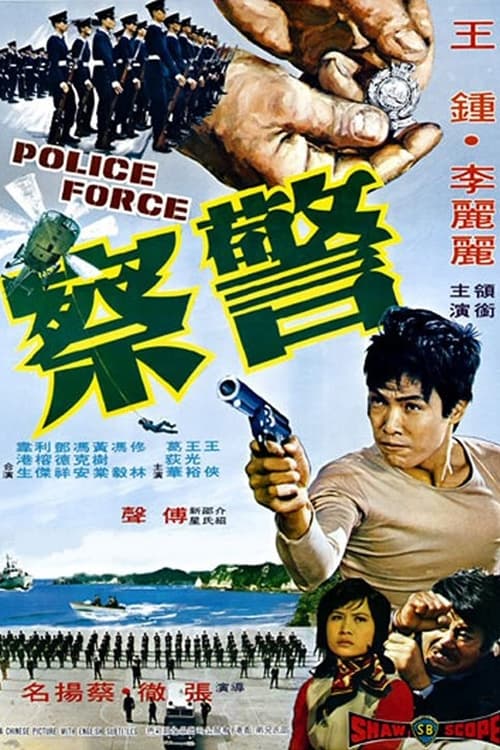
Police Force
1973
No user ratings available yet
Diversity score: 4.3 out of 10
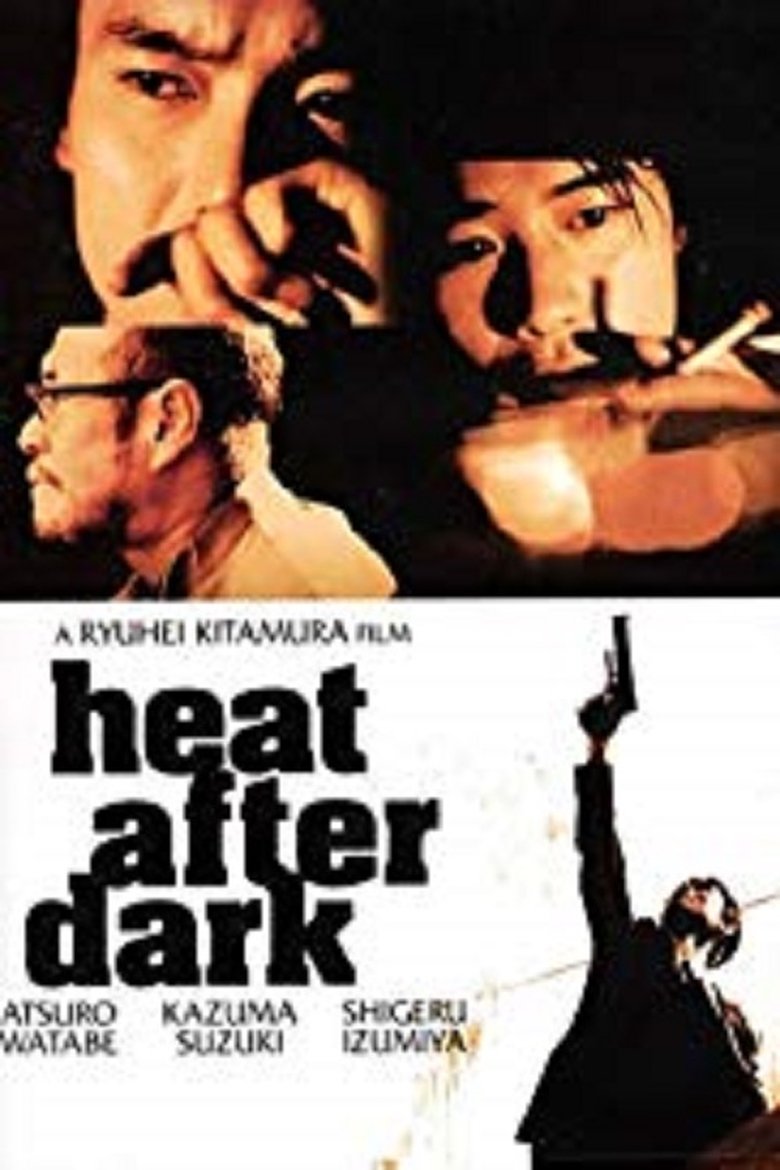
1996
Director
Ryuhei Kitamura
Runtime
50 minutes
Average Rating
No ratings yetSynopsis
Heat After Dark is director Ryuhei Kitamura's first theatrical release. This 50 minute film is predominantly a character study within an intense action drama. Those familiar with Kitamura's later works, perhaps especially Versus will realize this is the beginning of his characetristic modus operandi. Here, the well defined characters consist of the innocent (the cop), the relatively good (Atsuro Watabe), the relatively bad (Shinichi Suzuki), and the absolutely bad (Shigeru Izumiya ), and a few other Yakuza hoodlums thrown in for entertainment.
Overall Score
Fair
Category Breakdown
LGBTQ+ Representation
The film lacks explicit LGBTQ+ characters or narratives addressing non-cisnormative identities. It focuses instead on a hierarchical structure of criminal and law enforcement archetypes.
Gender Representation
The narrative centers heavily on male-coded archetypes, ranging from law enforcers to Yakuza criminals. There is little evidence of significant female agency or subversion of gender hierarchies.
Racial & Ethnic Diversity
As a Japanese production, the film provides deep immersion into a specific cultural social structure. It lacks intentional racial blending or the subversion of ethnic casting norms.
Religious & Cultural Diversity
The story explores a moral spectrum within the underworld but adheres to traditional crime-drama frameworks. It does not appear to deconstruct traditional institutions or prioritize secularism.
Disability Representation
There is no mention of characters possessing visible or invisible disabilities within the narrative.
Strengths
Areas for Improvement
AI Analysis
Heat After Dark serves as a foundational character study for Ryuhei Kitamura, establishing his stylistic approach to crime drama. The film relies on a spectrum of morality, categorizing characters from the innocent cop to the absolutely bad Yakuza. While the film offers a nuanced look at criminal archetypes, it remains deeply rooted in masculine-centric storytelling. The narrative architecture prioritizes genre tropes over intersectional complexity or systemic critique. Ultimately, the work functions as a culturally specific immersion into Japanese underworld dynamics rather than a progressive exploration of diverse identities.
No reviews yet. Be the first to share your thoughts on this movie!
Use the rating form above to leave a star rating and optional review.