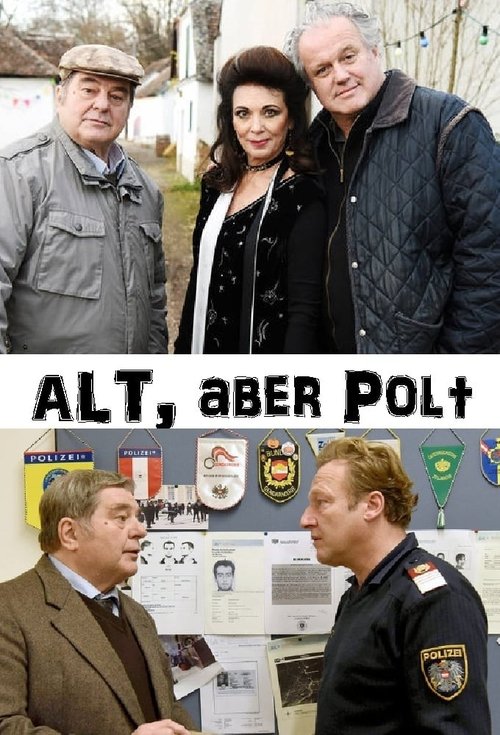
Alt, aber Polt
2018
No user ratings available yet
Representation score: 3.3 out of 10

Representation Score
Minimal
2020
Director
Julian Pölsler
Average Rating
No ratings yetNew Showbiz Analysis
The film opens on the postcard-perfect serenity of Altaussee, a lake district where the water is clear and the social lines are drawn in stone. It sells a cozy crime mystery, but the picture’s true argument lies in its casting: Cornelius Obonya, a Black Austrian actor, plays Franz Gasperlmaier, the seasoned police chief who has held his post for over twenty years. In a genre historically populated by white, middle-aged men, Obonya’s presence is not a disruption but a quiet normalization; the camera treats his authority as the natural order, framing him with the same warm, respectful lighting it would give any local hero. The narrative’s tension comes not from racial friction, but from the rigid, slightly pompous bureaucracy of the town. The local officials are the joke, their incompetence and rigidity providing the comic relief that allows Franz to shine as the competent outsider who is, in fact, fully inside. The film does not ask the audience to accept him; it simply shows him solving the case, navigating the social landscape, and restoring the status quo. The sold meaning is one of inclusive competence: a Black man can be the moral and intellectual center of a conservative, rural community without challenging its core values. The ending reinforces this stability. The community is intact, the truth is revealed, and Franz is absorbed back into the social fabric as a protector. There is no personal cost paid for his presence, no lingering tension about his place. The film’s argument is that diversity, when framed through the lens of competence and local loyalty, is unproblematic. It is a gentle, traditional story that uses a diverse lead to affirm the very social order it depicts, leaving the viewer with a sense of restored harmony rather than challenged assumptions.
Category Breakdown
No queer characters or same-sex couples appear. The narrative relies entirely on heterosexual pairings and traditional family structures.
Franz Gasperlmaier serves as the competent moral center, while his wife Christine remains a domestic support figure. Dr. Renate Kohlross is a professional, yet the investigation’s authority and final resolution rest squarely with the male lead.
Cornelius Obonya headlines the film as the local police chief, a significant deviation from the genre’s typical white phenotype. His presence is treated as unremarkable, positioning him as the integrated, authoritative protector of the rural community.
The film treats the Austrian small-town social fabric as a stable, positive hierarchy that the protagonist reinforces rather than disrupts. Local bureaucracy is the primary source of friction, but the community’s traditional order is ultimately restored and validated by the ending.
No characters with physical, sensory, or cognitive disabilities are depicted. The cast and plot contain no references to impairment or neurodiversity.
Present on Screen
Limited or Absent
Official Synopsis
Even Franz Gasperlmaier had never seen anything like this before. He's seen a lot of things, after all, Gasperlmaier has been a police officer in Altaussee for more than twenty years. But a stabbed man on a Monday morning in the festival tent at the Altaussee Kirtag is too much even for a seasoned man like him. And so he makes a wrong decision, not his last one that day, and the dead man sitting in his own blood in the festival tent won't be the only victim.
2018
2015
2016

2015
2022
2015
2009

2017
No reviews yet. Be the first to share your thoughts on this movie!
Use the rating form above to leave a star rating and optional review.