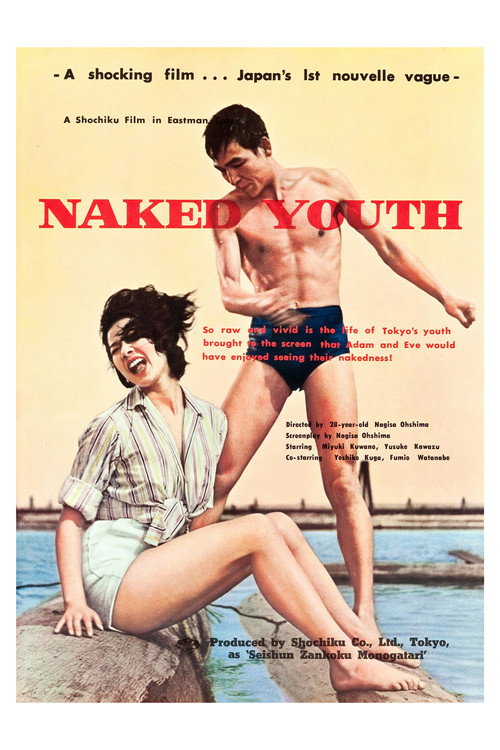
Cruel Story of Youth
1960
No user ratings available yet
Representation score: 6.3 out of 10
Representation Score
Limited
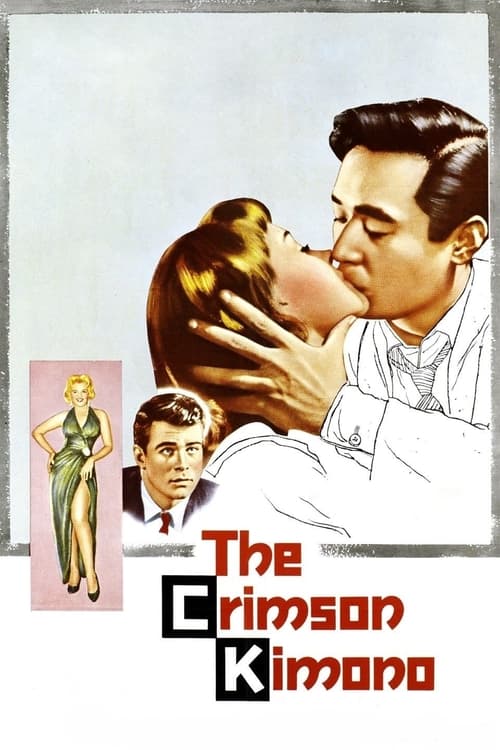
1959
ApprovedDirector
Samuel Fuller
Runtime
82 minutes
Average Rating
No ratings yetNew Showbiz Analysis
The Crimson Kimono stands out as a progressive work for 1959 due to its radical centering of racial ability to act. By placing a Japanese-American protagonist at the heart of a crime drama, it disrupts the era's standard Hollywood practices of relegating ethnic minorities to the periphery. However, the film remains tethered to the period's traditional social structures. The lack of LGBTQ+ visibility and adherence to mid-century gender hierarchies temper its overall impact. While the female lead is vital to the emotional stakes, the investigative ability to act remains firmly with the men. Ultimately, the film's strength lies in its ability to use a crime procedural to explore systemic prejudice and the 'othering' of immigrant communities, making it a nuanced study of identity.
Category Breakdown
The film adheres to the strict social constraints of 1959 and does not include any non-binary or LGBTQ+ identities or narratives.
The narrative follows mid-century hierarchies where male characters drive the investigation. Although the female lead is emotionally central, she has little control over the conflict's resolution.
The film is notable for its era, centering a Japanese-American protagonist and featuring an Asian-American cast. It explores systemic bias and the complexities of identity.
The story offers a sophisticated critique of Western institutional bias. It portrays the friction between the protagonist and law enforcement to deconstruct systemic prejudice.
There are no prominent depictions of visible or invisible disabilities that serve as central character traits or drive the narrative.
Present on Screen
Limited or Absent
Official Synopsis
Two detectives clash over the hunt for a burlesque dancer’s killer in Los Angeles’ Japanese district.
1960

1944
1983
1969

1946
1945

1958
1948
No reviews yet. Be the first to share your thoughts on this movie!
Use the rating form above to leave a star rating and optional review.