Winners Take All
1987
No user ratings available yet
Representation score: 3.2 out of 10
Representation Score
Fair
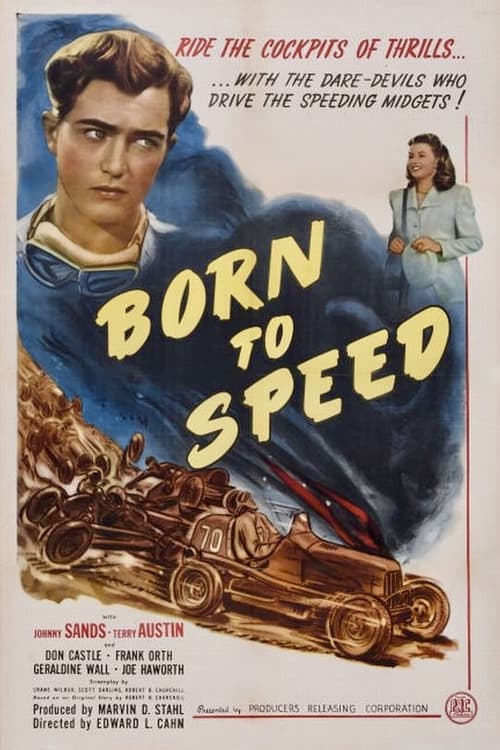
1947
ApprovedDirector
Edward L. Cahn
Runtime
61 minutes
Average Rating
No ratings yetNew Showbiz Analysis
Born to Speed is a period-specific action drama that adheres strictly to the social hierarchies of the late 1940s. The plot follows a conventional legacy cliché, focusing on a young man's drive to honor his late father through professional racing. The film functions as a standard genre piece, prioritizing established social norms over multi-layered depth. It lacks the structural elements necessary to challenge or disrupt the traditional status quo of its era. Ultimately, the narrative architecture reinforces mid-century Western values, centering on patriarchal lineage and homogeneous professional circles within the niche world of midget auto racing.
Category Breakdown
The film's romantic elements align with the assumption that everyone is straight or cisgender. There is no evidence of non-traditional gender identities or critiques of traditional social structures.
The narrative centers on a male protagonist pursuing a legacy in a male-dominated sport. While romance is present, the focus reinforces traditional gendered roles and occupations.
The setting suggests a homogeneous sporting environment typical of the era. The film lacks evidence of a diverse cast, defaulting to white-centric social circles.
The story follows a traditional hero's journey centered on familial lineage and meritocracy. It emphasizes mid-century Western values regarding patriarchy and professional achievement.
The focus on midget auto racing risks reducing subjects to spectacle. There is no evidence of characters with disabilities possessing meaningful ability to act or nuanced representation.
Present on Screen
Limited or Absent
Official Synopsis
The romantic, dangerous and fast-paced world of professional midget auto racing provides the backdrop for this dramatic tale of a young driver who decides to follow in his late father's footsteps and win the big race.
1987
1966
1954

1971
1925
1989
1941
1965
No reviews yet. Be the first to share your thoughts on this movie!
Use the rating form above to leave a star rating and optional review.