ReLIFE
2017
No user ratings available yet
Representation score: 4.3 out of 10
Representation Score
Fair
2021
Director
Shinji Imaoka
Runtime
98 minutes
Average Rating
No ratings yetNew Showbiz Analysis
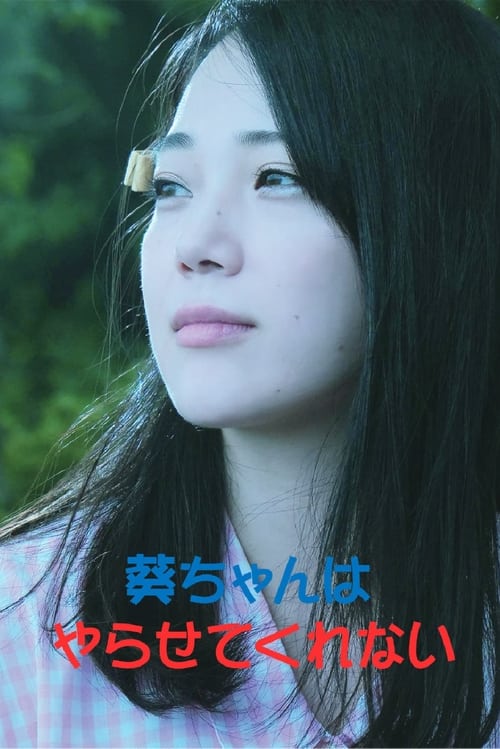
Aoi-chan Won't Let Me Do It is a genre-specific romantic comedy that uses supernatural elements to explore themes of regret and desire. While the time-travel premise offers a unique lens to examine memory and morality, the film remains anchored in traditional romantic structures. The narrative lacks multi-layered complexity and focuses on a localized, homogeneous social setting. The central conflict is driven by male characters seeking to reclaim past connections, which limits the breadth of the film's social perspective.
Category Breakdown
The story focuses on a romantic relationship between a male ghost and a female junior, following traditional heterosexual norms. There are no explicit representations of non-binary genders or same-sex relationships.
Aoi plays a crucial role as the catalyst, but the narrative is predominantly driven by male characters. The story revolves around male pursuits and the mechanics of time travel.
This is a localized Japanese production set in a domestic college environment. The cast appears homogeneous, with no evidence of multicultural casting.
The time-slip mechanism allows for a critique of regret and existentialism, focusing on individualistic moral frameworks rather than traditional societal norms.
The ghost functions as a metaphysical state exploring non-corporeal existence. It is unclear whether this non-standard condition provides deep ability to act or serves as a comedic device.
Present on Screen
Limited or Absent
Official Synopsis
In front of a man who wants to be a movie director, Shingo, the ghost of Mr. Kawashita, who was a senior in the college film research department who committed suicide a year ago, suddenly appears on his death anniversary. Mr. Kawashita says that he was revived because he wanted to have sex with his junior, Aoi, who had a crush on him when he was in college. In order to fulfill his desire to work with Aoi-chan, Kawashita-san and Shingo will travel back in time on that day when he was in college, which was probably the only chance for Kawashita-san to work with Aoi-chan. There was a nostalgic college Aoi-chan there. Can Mr. Kawashita redo the past and do it with Aoi-chan? It's funny, but a little sad time slip love story begins.
2017

2012

2016

2015

2024

2018

2018

2023
No reviews yet. Be the first to share your thoughts on this movie!
Use the rating form above to leave a star rating and optional review.