The Battle of San Pietro
1945
No user ratings available yet
Representation score: 0.6 out of 10
Representation Score
Minimal
1943
Director
David MacDonald, Roy Boulting
Runtime
60 minutes
Average Rating
No ratings yetNew Showbiz Analysis
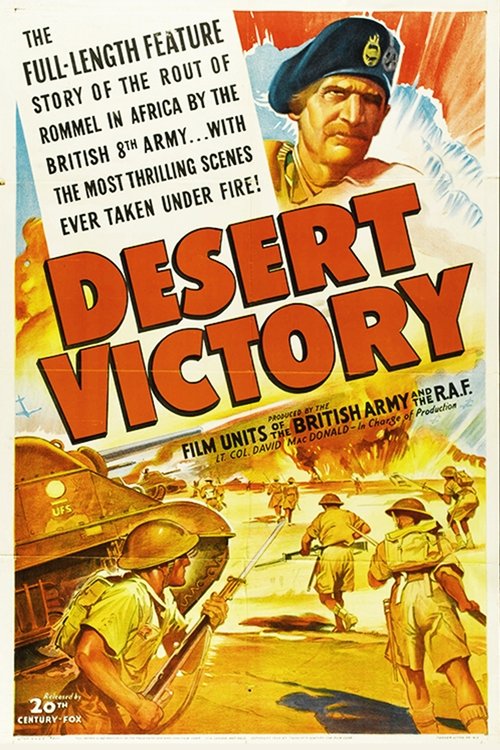
Desert Victory is a wartime documentary aimed at fostering national pride through the lens of the North African campaign. Its main goal is to reinforce military discipline and national identity, leaving little room for diverse character development. The film operates within the rigid social and colonial hierarchies of the 1940s. While it captures the scale of the Allied effort, the narrative remains centered on Western military structures and traditional masculinity. Overall, the film serves as a tool for institutional reinforcement rather than a platform for social exploration, presenting a narrow and homogeneous perspective.
Category Breakdown
The film does not include any LGBTQ+ characters or themes, focusing solely on the male camaraderie of the battlefield.
The movie emphasizes the male-dominated environment of the military, highlighting the importance of discipline and stoicism. Women are barely represented, reflecting traditional gender roles from the 1940s.
Commonwealth forces are shown, but the focus remains on British military leadership. The film highlights colonial hierarchies rather than embracing modern diversity.
The documentary promotes Western institutions and patriotism through a strict binary lens of duty and military authority, reinforcing the established order.
The film focuses on the mechanics of desert warfare and armored divisions. It does not depict individuals with physical or mental disabilities.
Present on Screen
Limited or Absent
Official Synopsis
A featureless land fit only for war, as the narrator, J. L. Hodson stated in the early scenes: "If war was to be fought then let it begin here". In endless miles of rock-strewn scrub desert, where civilians hardly existed. Desert Victory tells the story of the Allied campaign to drive Germany and Italy from North Africa is analysed, with the major portion of the film examining the battles at El Alamein, including some re-enactment. Won "Best Documentary Feature" at the 16th Academy Awards in 1944.
1945
1943
1944
1981

1946
2010

1942
1947
No reviews yet. Be the first to share your thoughts on this movie!
Use the rating form above to leave a star rating and optional review.