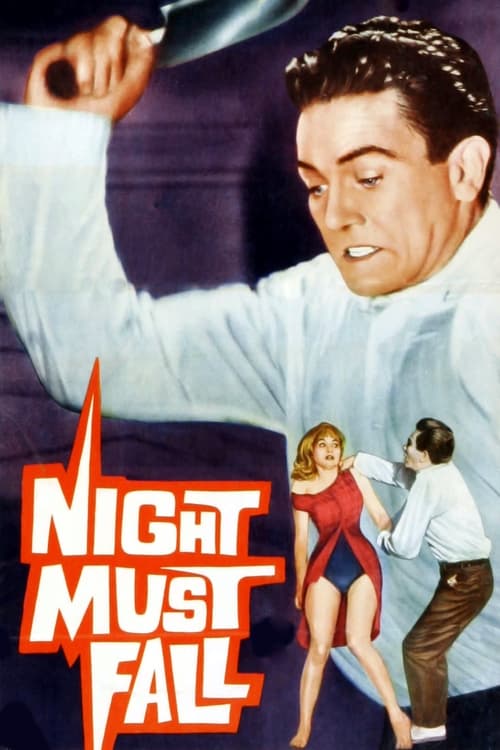
Night Must Fall
1964
No user ratings available yet
Diversity score: 3.2 out of 10

1988
Director
Alain Jessua
Runtime
100 minutes
Average Rating
No ratings yetSynopsis
When Catherine is caught with her illicit lover by her father-in-law Paul, the concerned father leaves to tell his son Thomas about the incident. Paul is injured in an auto accident and returns home in a wheelchair unable to speak. Catherine's guilt weighs heavily on her as she hopes to never let Thomas know she was unfaithful. She panics and seeks a way to eliminate Paul in this psychological thriller.
Overall Score
Limited
Category Breakdown
LGBTQ+ Representation
The film focuses on a heterosexual infidelity arc involving Catherine, Thomas, and Paul. There is no evidence of non-cisnormative identities or narratives that critique heteronormativity.
Gender Representation
Catherine serves as a protagonist with significant psychological agency. However, the conflict remains rooted in traditional marital and familial roles within a domestic crisis.
Racial & Ethnic Diversity
The narrative centers on a localized familial unit. There are no indications of a multi-ethnic cast or intersectional dynamics within the social structure.
Religious & Cultural Diversity
The story explores moral relativism and situational ethics. It disrupts traditional views of the family by portraying it as a site of panic and potential violence.
Disability Representation
Paul is depicted as a wheelchair user who is unable to speak. His disability functions primarily as a catalyst for the protagonist's psychological distress.
Strengths
Areas for Improvement
AI Analysis
No Harm Intended is a genre-driven psychological thriller that prioritizes domestic tension over social representation. The narrative explores the breakdown of stability through a character study of guilt and desperation. While the film avoids idealized family tropes by highlighting domestic volatility, it lacks intersectional depth. The focus remains on a narrow, traditional Western social framework. Ultimately, the film uses its characters to drive a plot of moral ambiguity rather than to challenge systemic hierarchies or provide meaningful representation for diverse identities.
1964
1971
1974

1993

1992

1990
1992

2019

1971

1998

2019

1984
No reviews yet. Be the first to share your thoughts on this movie!
Use the rating form above to leave a star rating and optional review.