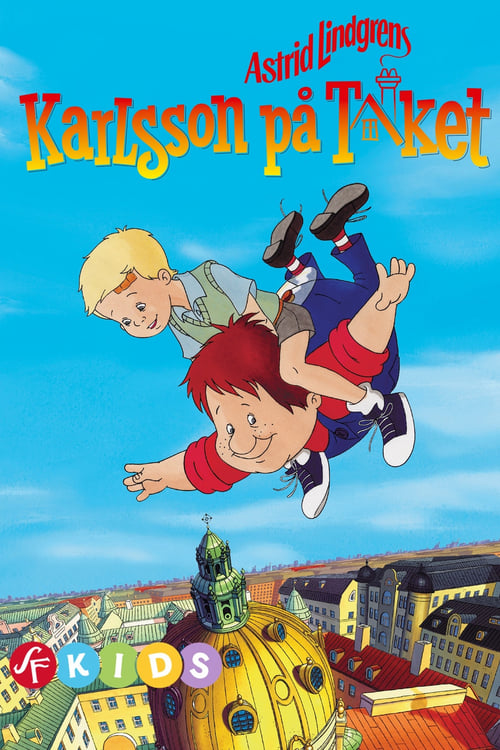
Karlsson on the Roof
2002
No user ratings available yet
Representation score: 3.4 out of 10

Representation Score
Good
2019
Director
Anne–Lise Koehler, Eric Serre
Runtime
61 minutes
Average Rating
No ratings yetNew Showbiz Analysis
Hello World! succeeds as a sensory exploration that deconstructs adult-centric viewpoints. By centering on a child's subjective experience, the film naturally challenges conventional social hierarchies and rigid behavioral norms. However, the film lacks explicit demographic markers. The absence of clear character identities and the reliance on a Western European setting limit its impact regarding racial and queer representation. Ultimately, the film's strength is its metaphorical approach to neurodivergence and its celebration of individual ability to act through a non-linear, impressionistic lens.
Category Breakdown
The film does not explicitly include queer identities or romantic subplots. However, its focus on fluid perception avoids rigid social structures by centering on a child's early development.
The narrative disrupts traditional hierarchies by prioritizing curiosity over socialized gender roles. It focuses on the child's internal world rather than performative masculinity or femininity.
The film's aesthetic leans toward a traditional Western European context. While the abstract animation style avoids explicit racial categorization, there is no evidence of intentional racial blending.
The film critiques Western institutional order by framing the world through a child's subjective truth. It prioritizes individual perception over structured social etiquette and authority.
The visual translation of sensory input serves as a metaphor for neurodivergence. The protagonist's unique way of seeing drives the plot rather than being treated as a deficit.
Present on Screen
Limited or Absent
2002

2017

2010

2018

2007
2018
2022

2022
No reviews yet. Be the first to share your thoughts on this movie!
Use the rating form above to leave a star rating and optional review.