
The Last Hunter
1980
No user ratings available yet
Representation score: 1.7 out of 10
Representation Score
Limited
1966
ApprovedDirector
Mark Robson
Runtime
129 minutes
Average Rating
No ratings yetNew Showbiz Analysis
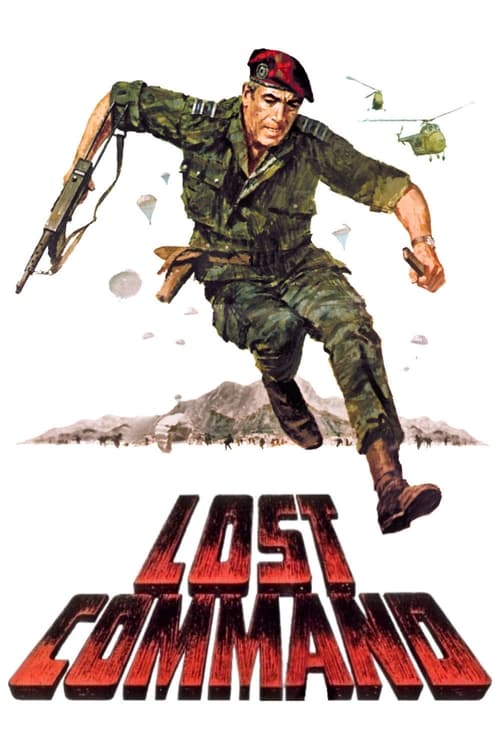
Lost Command is a conventional mid-century war drama that mirrors the social hierarchies of 1966. The film prioritizes traditional masculine leadership and Western military authority, offering little complexity in representing diverse identities. The narrative is driven by male-centric military structures and heterosexual motivations. Female characters lack independent roles, serving instead as secondary rewards for the protagonists' success. While the setting includes North African locals, the perspective remains firmly rooted in the colonial military viewpoint. The film functions as a standard representation of mid-20th-century cinematic values.
Category Breakdown
The film follows a strictly male-focused military structure with no representation of non-straight or non-cisgender identities. There is no presence of same-sex intimacy or diverse sexual orientations.
Narrative ability to act belongs almost exclusively to male characters. Women appear as peripheral figures, serving primarily as romantic motivators for the lead rather than as independent characters.
The cast is predominantly white, reflecting the colonial military forces of the era. While North African characters appear, they function within established power dynamics rather than as central figures with significant roles.
The story reinforces Western military authority and traditional leadership structures. It focuses on discipline and order rather than challenging institutional or geopolitical norms.
Characters are defined by combat readiness and military utility. There is no significant focus on neurodivergence, chronic illness, or characters with visible disabilities.
Present on Screen
Limited or Absent
Official Synopsis
After being freed from a Vietnamese war prison, French Lt. Col. Pierre Raspeguy is sent to help quell resistance forces in Algeria. With the help of the Capt. Esclavier, who has grown weary of war, and Capt. Boisfeuras, who lives for it, Raspeguy attempts to convert a rugged band of soldiers into a formidable fighting unit, with the promise of marrying a beautiful countess if he's made a general.
1980
1965
1986
1966
1957

1967

1969
1966
No reviews yet. Be the first to share your thoughts on this movie!
Use the rating form above to leave a star rating and optional review.