
From Me to You
2010
No user ratings available yet
Representation score: 3.5 out of 10
Representation Score
Fair
2020
Director
Koichiro Miki
Runtime
112 minutes
Average Rating
No ratings yetNew Showbiz Analysis
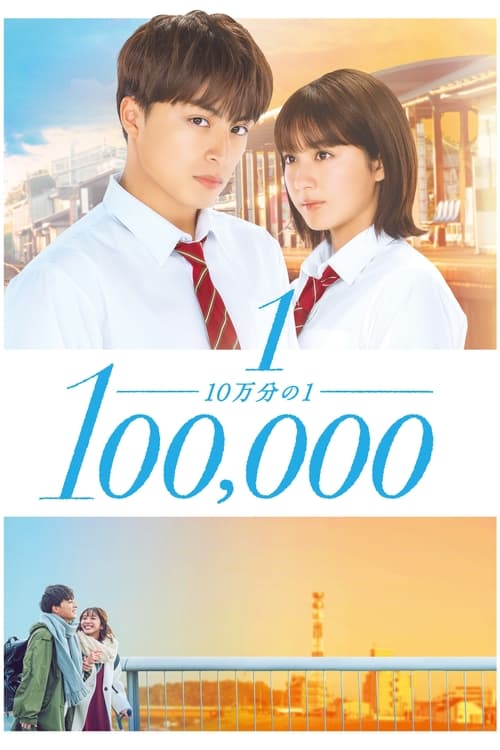
One in a Hundred Thousand is a character-driven drama that uses a specific medical reality to explore human connection. It succeeds by placing the lived experience of a physical disability at the center of the protagonist's journey, rather than treating it as a secondary plot point. However, the film remains within traditional narrative boundaries. It lacks multi-layered breadth, adhering to a homogeneous cast and a standard straight-centered romantic framework that does not challenge existing social hierarchies. Ultimately, the film's strength lies in its focus on individual vulnerability and resilience, even as it stays within the conventional clichés of the Japanese romantic drama genre.
Category Breakdown
The story follows a heterosexual relationship between Rino and Ren. There is no evidence of LGBTQ+ identities or critiques of traditional sexualities within the narrative.
Rino Sakuragi provides the emotional ability to act as the central protagonist. While the plot follows traditional romantic trajectories, the focus on her physical diagnosis shifts the power dynamic toward personal resilience.
The film features a homogeneous Japanese cast consistent with its regional setting. The narrative adheres to traditional demographic norms without evidence of a multi-ethnic ensemble.
The narrative explores mortality and the fragility of life through interpersonal connections. It functions within conventional social structures rather than offering systemic or anti-institutional critiques.
By centering the plot on a character navigating ALS, the film places a progressive neurodegenerative condition at the heart of the arc. This moves beyond mere background inclusion.
Present on Screen
Limited or Absent
Official Synopsis
Rino Sakuragi (Yuna Taira) is a high school student. She is good friends with Ren Kiritani (Alan Shirahama) who attends the same high school. They have been close since their middle school days. Rino holds special feelings for Ren Kiritani, but she is unable to tell him how she feels because he is popular. One day, Ren confesses to Rino that he likes her. They begin to date and enjoy their time together, but Rino is diagnosed with ALS (amyotrophic lateral sclerosis).
2010

2024

2017

2021

2017

2017

2016
2018
No reviews yet. Be the first to share your thoughts on this movie!
Use the rating form above to leave a star rating and optional review.