
Celluloid Nightmares
1999
No user ratings available yet
Representation score: 2.2 out of 10

Representation Score
Good
1997
Director
Naoyuki Tomomatsu
Runtime
60 minutes
Average Rating
No ratings yetNew Showbiz Analysis
Naoyuki Tomomatsu’s work is a transgressive exploration of societal decay and human deviance. The film challenges conventional moral frameworks by showing characters who operate on the fringes of legality and ethics. However, the film's heavy reliance on the exploitation of women and the use of psychological dysfunction as a mere horror device limits its depth. While it effectively deconstructs social norms, it fails to give real power to underrepresented groups. The narrative is a dark, nihilistic study of obsession that prioritizes shock value over diverse representation.
Category Breakdown
The film centers on unusual sexual obsessions rather than specific LGBTQ+ identities. It doesn't explore identity-driven stories or challenge the assumption that everyone is straight or cisgender.
Gender dynamics are problematic, focusing on the victimization and sexualization of women. The story prioritizes the actions of male characters over empowering women.
As a Japanese production, the film explores a specific urban subculture in Osaka. It stays within a homogeneous cultural framework without including actors from different ethnic backgrounds.
The story strongly criticizes social order by focusing on characters who oppose legal and ethical institutions. It uses nihilism to break down traditional morality.
Psychological issues and extreme compulsions drive the plot. These conditions are used as horror elements rather than detailed character studies.
Present on Screen
Limited or Absent
Official Synopsis
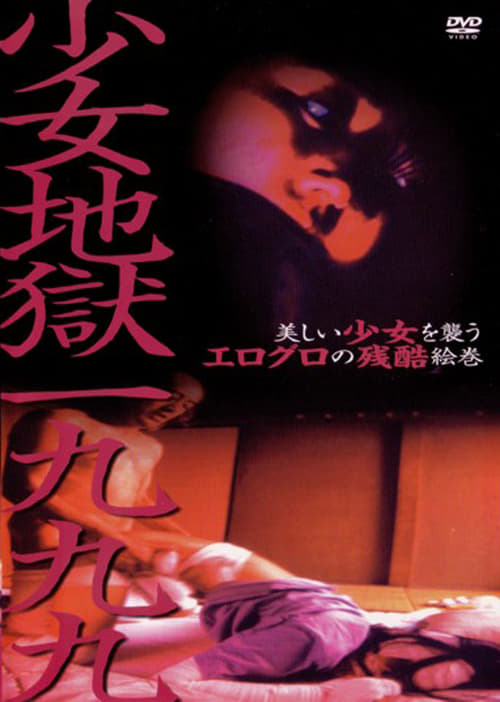
"Eat the Schoolgirl" concerns two young adults who made a dirty work for a yakuza gang by making sadistic rape/snuff films. Both of them are sexually obsessed; one is addicted to telephone sex whilst the other can only function sexually, whilst seeing mutilated female corpses.
1999

2005

1990

1969
1999

1989

2004

2005
No reviews yet. Be the first to share your thoughts on this movie!
Use the rating form above to leave a star rating and optional review.