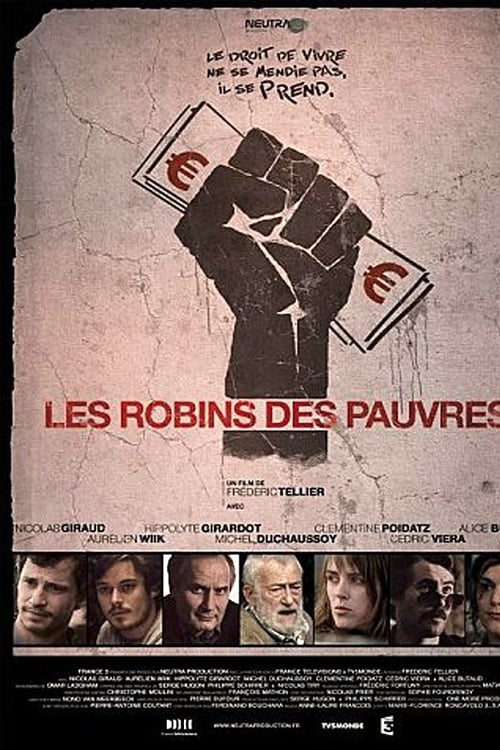
The Robin Hoods of the Poor
2011
No user ratings available yet
Representation score: 2.8 out of 10
Representation Score
Fair
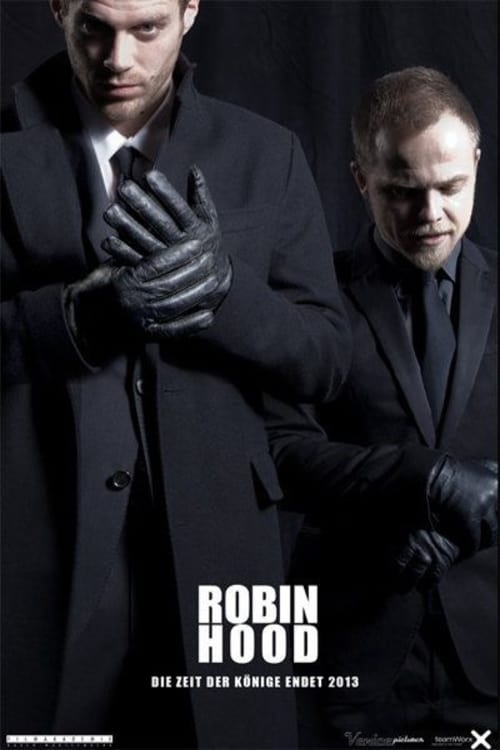
2013
Director
Martin Schreier
Runtime
100 minutes
Average Rating
No ratings yetNew Showbiz Analysis
Martin Schreier’s film functions primarily as a socio-economic critique rather than a study in demographic diversity. It prioritizes themes of systemic collapse and wealth redistribution over diverse character identities. The narrative achieves its highest impact through cultural representation, using the protagonist's arc to deconstruct the morality of existing social and financial hierarchies. It challenges the legitimacy of state institutions and corporate power. However, the film lacks significant markers for racial, LGBTQ+, or disability representation. The social landscape appears relatively homogeneous, focusing on European structures and traditional romantic dynamics.
Category Breakdown
The story centers on a romantic tension between Alexander and Sophie, following a traditional heterosexual relationship without any visible non-binary gender identities.
The film features dual protagonists in positions of authority, sharing intellectual parity despite traditional gender roles and a conventional romantic subplot.
The setting focuses on a near-future Germany and a European economic collapse. There is no mention of a multi-ethnic cast or diverse racial identities.
The film offers a strong critique of capitalist structures and institutional stability. It portrays the protagonist as a systemic disruptor challenging corrupt corporate power.
The narrative provides no information regarding characters with visible or invisible disabilities. No representation or mockery is present in the story.
Present on Screen
Limited or Absent
Official Synopsis
In the near future: the EU has collapsed, stock market prices have collapsed, energy costs have exploded; many thousands lose the roof over their heads and literally end up on the street. Alexander Scholl and Sophie Kaiser act as police officers investigating DNB, which has contributed to the precarious situation in Germany. Their CEO Rainer van Kampen is able to avert charges despite the overwhelming burden of proof. There is only one way out for Alexander: he joins forces with a group of outlaws: they commit robberies, hack into accounts and publicly pillory financial fraudsters. They distribute their loot to people on the street. Alex" is quickly celebrated by the people and the media as "Robin Hood". But for his former colleague Sophie, with whom Alex is secretly in love, Robin Hood is a nasty criminal. The situation escalates, as not only the police and Sophie are hot on Alexander's heels, but also those behind the DNB...
2011
2004
2010
2012

2005
1998

2020

2003
No reviews yet. Be the first to share your thoughts on this movie!
Use the rating form above to leave a star rating and optional review.