
You Are My Sunshine
2005
No user ratings available yet
Representation score: 7.4 out of 10
Representation Score
Limited
1997
Director
Lee Jung-gook
Runtime
105 minutes
Average Rating
No ratings yetNew Showbiz Analysis
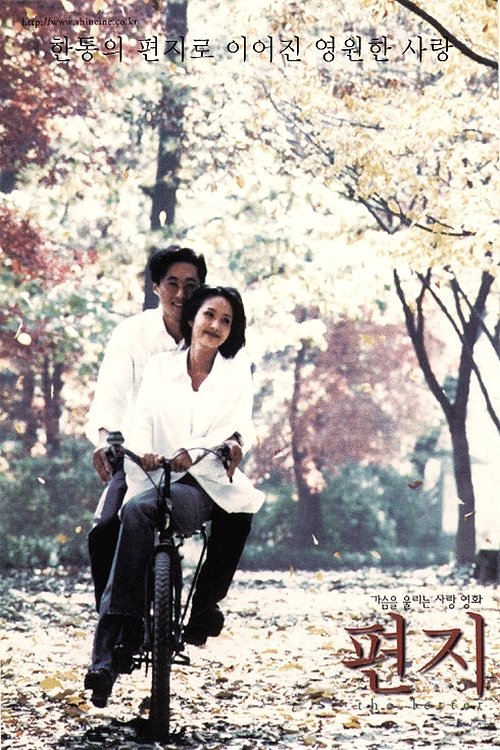
The film opens on the quiet, domestic rhythm of a married couple, a space where the husband’s academic career and the wife’s supportive presence form a stable, unmarked ideal. This 1997 South Korean drama sells a vision of traditional familial duty, where the husband’s impending death from cancer transforms the household into a site of emotional labor. The camera lingers on the wife’s face as she receives his letters, positioning her as the moral center who must absorb the grief of his departure. The sold meaning is one of stoic endurance: the husband’s illness is not a failure of the body but a test of the wife’s devotion, which she meets with quiet, unwavering grace. The film’s argument rests on the sanctity of the nuclear unit, treating the marriage as the ultimate container for meaning. The husband’s letters serve as a bridge between the living and the dead, ensuring that his love outlasts his physical form. This framing elevates the traditional gender roles of the era, where the man is the provider and thinker, and the woman is the keeper of memory and emotion. The contradiction lies in the film’s reliance on the husband’s active role in his own mourning; he dictates the terms of their separation, while the wife is left to interpret his final words. The last image, likely a solitary figure or a lingering shot of the letters, cements the wife’s role as the eternal guardian of the relationship, a position that is both honored and isolating. The film does not challenge the hierarchy of the domestic sphere but reinforces it, presenting the wife’s emotional labor as a noble, if burdensome, duty. The absence of external conflict or social commentary keeps the focus tightly on the private grief of the couple, a choice that reflects the cultural context of 1990s South Korean cinema. The film’s strength lies in its restraint, allowing the weight of the illness to settle on the characters without melodrama. The final verdict is a quiet affirmation of traditional values, where the wife’s loyalty is the ultimate measure of the marriage’s success, and the husband’s death is a transition rather than an ending.
Category Breakdown
The narrative centers exclusively on a heterosexual marriage, with no queer characters or non-heteronormative dynamics present. The romantic structure remains strictly binary, offering no alternative relationship models within the cast or plot.
The husband acts as the primary agent, driving the plot through his diagnosis and letters. The wife remains largely reactive, serving as the emotional recipient who absorbs his grief and maintains the household.
The cast and settings feature exclusively East Asian faces, reflecting the film's specific South Korean context. Racial diversity is absent, with the narrative confined to a homogeneous cultural environment.
The film reinforces traditional familial duty and the sanctity of the nuclear unit. It presents a quiet, domestic ideal where the husband’s academic career and the wife’s supportive presence form a stable, unmarked social structure.
Illness is depicted as a physical burden that disrupts the household’s routine and financial stability. The terminal condition is framed strictly as a medical event, lacking broader social or identity-based exploration.
Present on Screen
Limited or Absent
Official Synopsis
A happily married couple see only good days ahead of them; but the husband discovers that he is dying of cancer. Heartbroken at the possibility of leaving his wife behind, he proceeds to write love letters aimed at consoling his wife.
2005

2011

2007

1998
2018
1993

1953
2003
No reviews yet. Be the first to share your thoughts on this movie!
Use the rating form above to leave a star rating and optional review.