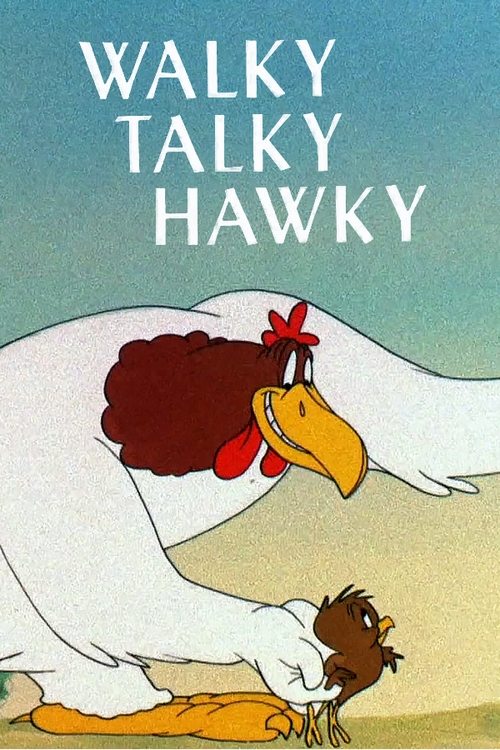
Walky Talky Hawky
1946
No user ratings available yet
Representation score: 0.4 out of 10
Representation Score
Minimal
1947
ApprovedDirector
Robert McKimson
Runtime
6 minutes
Average Rating
No ratings yetNew Showbiz Analysis
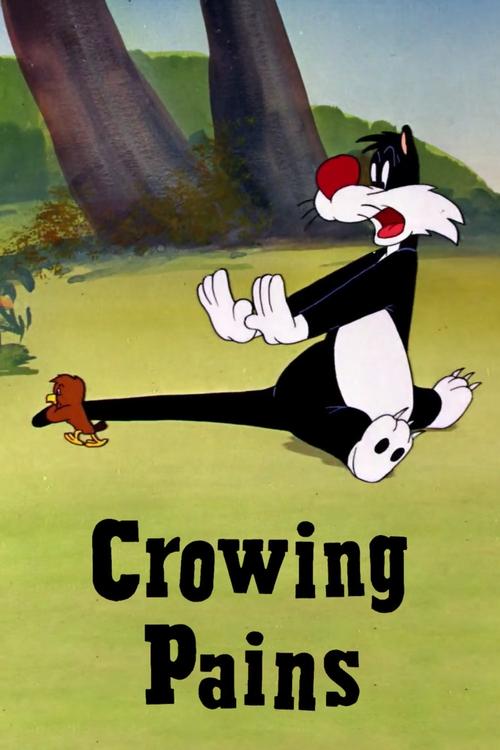
Crowing Pains is a traditional comedic short that relies on well-established character types and slapstick humor. The narrative revolves around a predator-prey dynamic involving Henery Hawk, Foghorn Leghorn, and Sylvester, adhering to the comedic conventions of the 1940s. The film does not make deliberate efforts to challenge social hierarchies or include diverse identities. Instead, it reinforces mid-century social norms through a homogenous cast of animal characters. Overall, the film prioritizes energetic situational comedy over diverse representation, focusing on a masculine power struggle within a traditional Western setting.
Category Breakdown
The film centers on animal characters and slapstick humor. It does not address LGBTQ+ identities or challenge assumptions about straight relationships.
Characters like Henery Hawk and Foghorn Leghorn embody traditional masculinity through aggression and confidence. The story does not feature strong female roles or challenge gender stereotypes.
The film uses anthropomorphic animals in a rural setting. The characters fulfill specific comedic roles without reflecting diverse backgrounds or cultures.
The setting depicts a traditional Western countryside. The narrative highlights individualistic pursuits and slapstick humor without critiquing cultural norms or societal structures.
There are no characters with visible or invisible disabilities. Disabilities are not used as part of the story’s themes or messages.
Present on Screen
Limited or Absent
Official Synopsis
Henery Hawk hides in an egg to catch his first chicken, while Foghorn Leghorn tells him that Sylvester is the real chicken and the farm dog joins in the fun.
1946
1953
1952
1963
1959
1948
1956
1958
No reviews yet. Be the first to share your thoughts on this movie!
Use the rating form above to leave a star rating and optional review.