
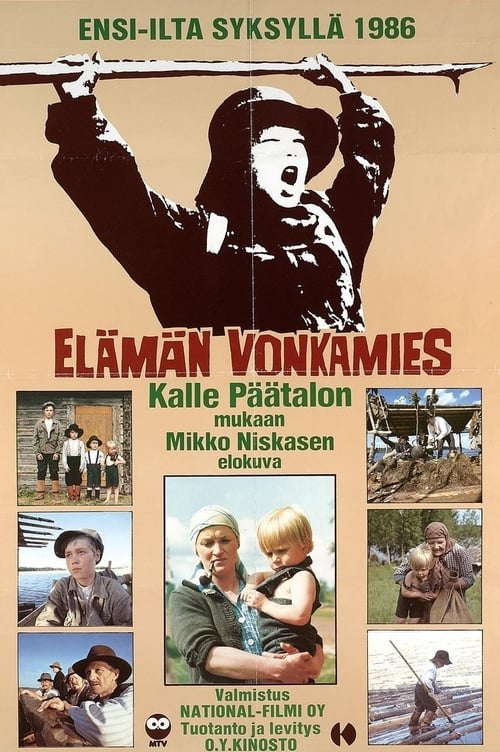
One Man's War
1974
No user ratings available yet
Representation score: 2.4 out of 10
Representation Score
Limited
1982
Director
Mikko Niskanen
Runtime
109 minutes
Average Rating
No ratings yetNew Showbiz Analysis
Gotta Run! is a social realist drama that prioritizes the struggles of the working class over individual triumphs. It offers a critical, secular perspective on traditional social structures and the pastoral ideal of rural life. However, the film lacks depth in representing diverse identities. The narrative is heavily male-centric, and the ethnic homogeneity of the setting limits racial diversity. Women and LGBTQ+ individuals are largely absent from the central plot.
Category Breakdown
The film does not explicitly depict LGBTQ+ identities or relationships that go beyond the assumption that everyone is straight. The story focuses mainly on the fraternal bonds and socioeconomic struggles of the male protagonists.
The story centers on male protagonists navigating labor and patriarchal structures. Women appear primarily as peripheral figures within a domestic framework, such as a father's new wife.
The cast appears ethnically homogeneous, reflecting the localized study of Finnish and Nordic social dynamics. There is no indication of non-Nordic identities within this 1982 setting.
The film critiques traditional institutions by presenting family estates and rural stability as sources of dysfunction. It emphasizes the drifter identity and the struggle against systemic economic limitations.
There is no noticeable focus on physical or neurodivergent disabilities within the narrative.
Present on Screen
Limited or Absent
Official Synopsis
Juuso, Late, and Pyry return from military service to their small village in the Finnish countryside. Finding work is difficult there, so Juuso decides to take a job on a Norwegian oil drilling platform. Late could start working on his family's chicken farm but wants to break free from his father who has a new wife. Looking for work in Gothenburg, Sweden, he only runs into more problems and is deported back to Finland. Pyry would like to take over his late father's farm but family quarrels over the estate make him quit his agricultural studies and, together with drifter Late, take a job in a steel mill in southern Finland.
1974

1961
1983
1988
1978

1988
1986

1980
No reviews yet. Be the first to share your thoughts on this movie!
Use the rating form above to leave a star rating and optional review.